
When a building report and a specialist report appear to disagree, ask your insurer to identify the documents and findings it relied on, explain the difference, and connect its reasoning to the proposed repair scope or coverage decision. Start with a precise comparison rather than assuming the newest report automatically wins.
This is general information for Australian readers, not personal financial advice or legal advice. Claim outcomes depend on the policy, Product Disclosure Statement (PDS), schedule, evidence and circumstances. A comparison worksheet does not establish a legal entitlement or substitute for qualified technical advice.
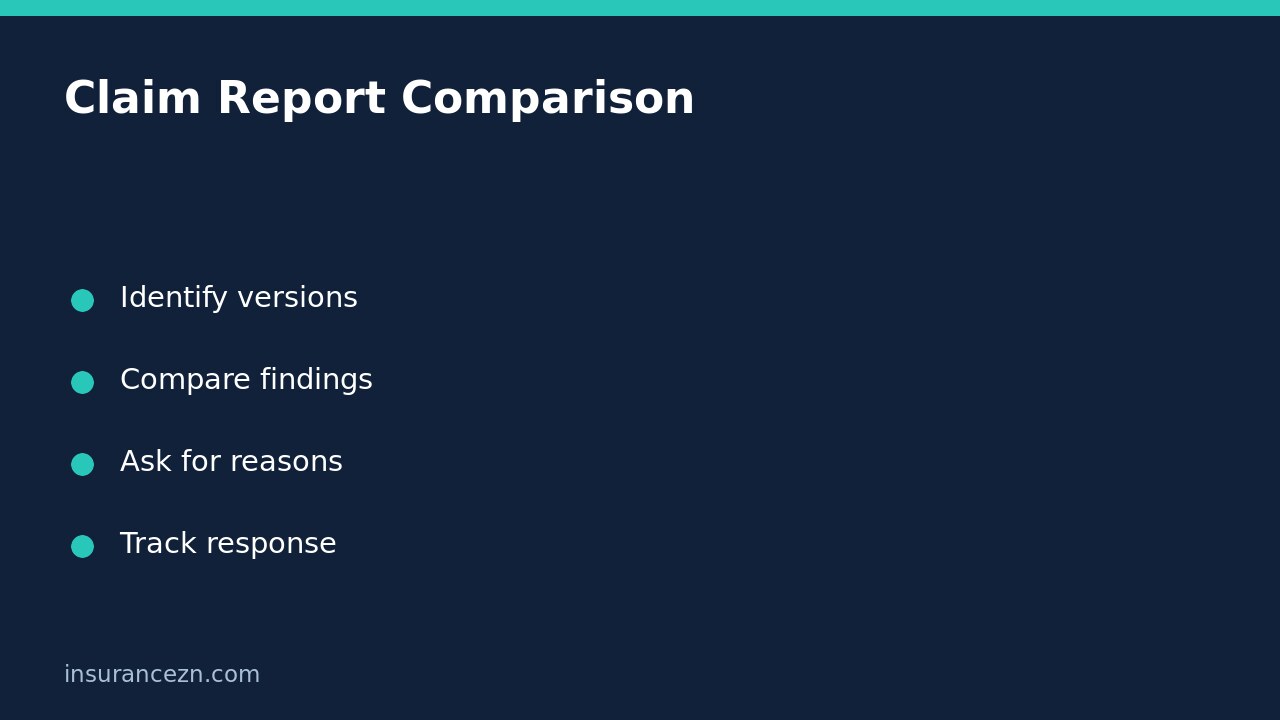
Obtain the actual reports and identify their versions
Legal Aid NSW recommends requesting assessor and expert reports and reading them for accuracy. Its October 2023 disaster-claims publication names building, engineering, hydrologist and hygienist reports among the documents that may matter. That practical guidance supports asking for the underlying material rather than relying solely on a telephone summary.
Create a small report register. For each document record its title, author, professional role, inspection date, issue date, version and attachments. Ask whether an amended report exists and whether the insurer has supplied all attachments referred to in the decision. A later email summarising an earlier inspection is not necessarily a revised technical report.
Use neutral filenames and preserve the originals. If two files have the same name, give your working copies different reference numbers rather than overwriting one. An honest uncertainty such as ‘version not stated’ is more useful than guessing which document is final.
Check whether the findings truly conflict
Reports can address different rooms, different dates or different questions. A builder may price a proposed repair, while an engineer considers a structural concern. A statement that a surface was dry on inspection does not necessarily answer whether it was wet immediately after the event.
For each apparent disagreement, compare the location, observation, assumed facts, inspection limits and conclusion. Separate an observable fact from a technical opinion and from the insurer’s policy interpretation. If the issue is simply a wrong address, date or room description, use our factual-correction request checklist. A genuine difference in expert opinion needs a reasoned explanation, not merely a corrected spelling.
Build a disagreement table with page references
Keep the table focused on issues that could change the decision or repair scope. Suggested columns are issue number, location, report A reference, report B reference, apparent difference and question for the insurer. Quote only the short passage needed to identify the point and retain its surrounding qualifications.
For a fictional example, one report might recommend replacing a damaged wall lining while another repair scope allows only repainting. Your question could be: ‘Please explain why the current scope provides repainting only, and whether the replacement recommendation on page four has been accepted or rejected.’ This asks how the evidence was used without pretending that the homeowner has resolved the technical question.
Do not combine unrelated disagreements into a single allegation that everything is wrong. A short list of clearly referenced issues is easier to answer and easier to follow up.
Request a decision-linked explanation
Send the register and table with a concise request identifying the claim number. Ask which report versions informed the decision, whether the apparent disagreement has been referred back to the relevant expert, and what explanation supports the chosen repair method. Where cover is disputed, ask which policy wording and factual findings the insurer relied on.
Make your requested outcome explicit: a written explanation, a revised scope, clarification from the author, or consideration of another inspection. These are requests, not promises that the insurer must fund any specialist you choose. Before commissioning an independent report, ask about approval, proposed questions, cost and reimbursement. Obtain independent advice if the financial or safety implications are significant.
Track the response without losing urgent issues
Record the date sent, attachments, recipient and response. When an answer arrives, map it back to each issue. Mark it answered, partly answered or unresolved, explaining why. Keep the original disagreement visible instead of repeatedly forwarding an expanding email chain with no summary.
Do not delay essential safety action while waiting for document reconciliation. If you are concerned about an unsafe structure, follow professional and emergency guidance. Nor should you assume that asking questions pauses an offer expiry, complaint deadline or legal obligation. Seek timely independent advice about those matters.
Frequently asked questions
Does the latest report replace all earlier reports? Not automatically. Ask whether it supersedes a specific document and which earlier findings remain relied upon.
Will an inconsistency force the insurer to accept the claim? No. A discrepancy may require clarification, but coverage and repair decisions still depend on the full evidence and policy.
What if the response still does not address the issue? Identify the unanswered question in writing and ask about the insurer’s formal complaint process. Do not assume an ordinary information request has already been registered as a complaint.
Source and scope
Legal Aid NSW: Insurance claims after a disaster, October 2023. This article uses its practical guidance about requesting and checking expert reports, not its historical service contacts or unverified current deadlines. The register and comparison table are suggested record-keeping tools, not a mandated national procedure.