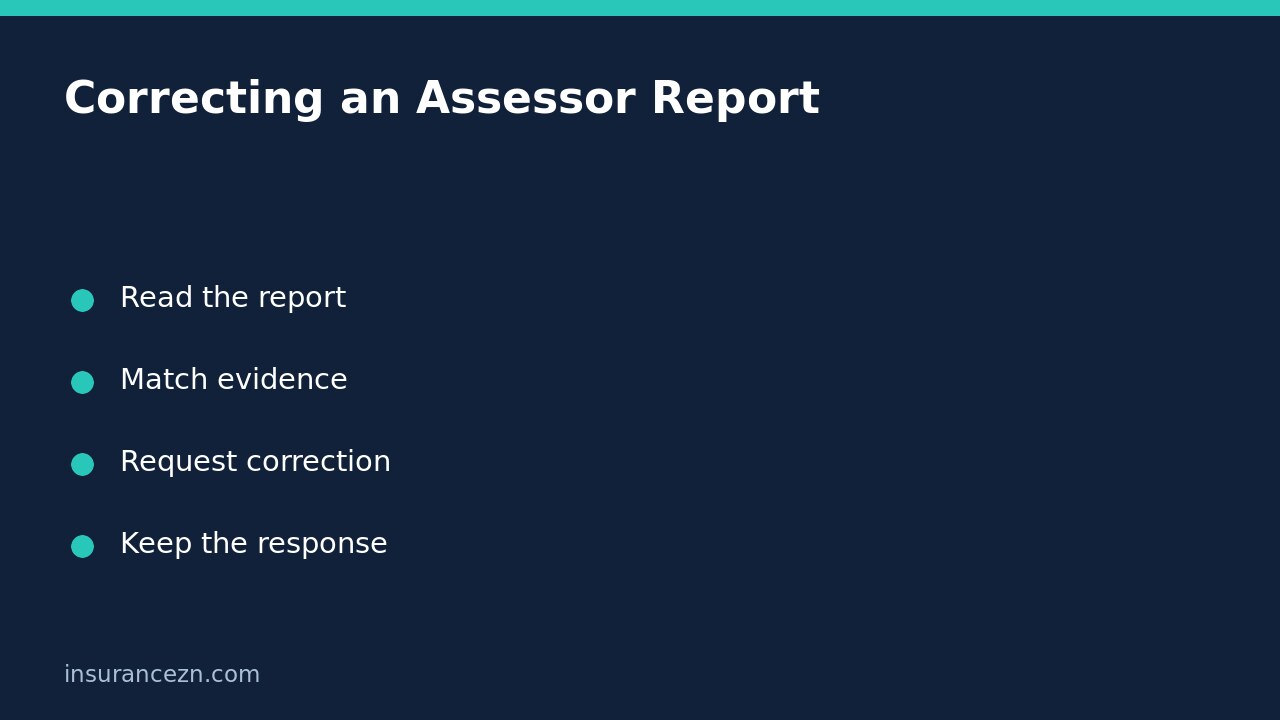

If an insurance assessor report contains an incorrect date, room description or account of damage, send the insurer a precise correction request supported by evidence. Identify the page and statement, explain what is wrong and ask how the insurer will review it. A factual correction request is different from simply saying the whole assessment is unfair.
This is general information for Australian readers, not personal financial advice or legal advice. Your policy, Product Disclosure Statement (PDS), schedule, exclusions and claim circumstances determine cover. An amended report does not guarantee a claim will be accepted or paid at a particular amount.
Obtain the report the insurer is actually using
Ask your claims manager for the assessor report and any relevant attachments, photographs, scope of works or specialist reports relied on in the decision. Request the report date and version. If a summary has been emailed to you, establish whether it is the complete report or only the claims manager’s explanation.
The Legal Aid NSW guide to insurance claims after a disaster recommends obtaining and checking assessor and expert reports. Its factsheet about dealing with an insurer also explains the role of building, engineering and other specialist reports. These publications are NSW legal assistance resources; this article uses their practical record-checking guidance rather than treating every legal statement as a nationwide rule.
Save the original file unchanged. Make notes in a separate copy so that your complaint clearly distinguishes the report’s wording from your annotations.
Separate facts, technical opinions and policy decisions
Three different problems need different responses. A factual mistake might name the wrong room or record an inspection on the wrong date. A technical disagreement might concern whether cracking is structural or what caused moisture. A coverage disagreement concerns whether the policy responds to the established facts.
Start with errors you can demonstrate. Do not describe an engineer’s conclusion as a typing mistake merely because you disagree with it. Ask what evidence supports the conclusion and whether a suitably qualified specialist should review it. Avoid making technical claims beyond your knowledge.
- Fact: The report says the laundry was inspected, but the inspection record identifies only the kitchen.
- Opinion: The assessor attributes staining to gradual deterioration rather than the reported event.
- Coverage: The insurer relies on an exclusion when declining a repair item.
Correcting the first issue may help clarify the other two, but it does not automatically resolve them.
Build an evidence table with one issue per row
Use four columns: report reference, disputed statement, supporting evidence and requested action. Give each attachment a short filename and date. Include clear photographs, relevant invoices, maintenance records or contemporaneous messages where they genuinely address the issue. Avoid sending an unlabelled folder containing every photograph you own.
For a hypothetical example, page four describes damage in a bedroom, while the numbered inspection photographs show the affected area is the hallway. Your entry could request correction of the location and ask whether the mistaken description changed the proposed repair scope. Attach the floor plan and the relevant images, not an unsupported allegation that the assessor deliberately misled anyone.
Preserve original image files. Do not edit dates or alter photographs to strengthen your position. Explain what a document establishes and what remains uncertain. If an image was taken after clean-up, say so.
Write a focused request to the claims manager
A useful starting message is: I am requesting review of factual inaccuracies in the report dated [date] for claim [number]. The attached table identifies each statement, its page reference and the supporting evidence. Please confirm whether the assessor will correct the report or provide a written response explaining any disagreement. Please also explain whether these issues affect the repair scope or coverage decision.
Ask for acknowledgement and an expected response date. If work or settlement discussions are progressing, identify the specific disputed item and ask how it will be handled while the review is pending. Do not assume that sending an email automatically suspends repairs, settlement deadlines or other obligations.
For help keeping the supporting material together, see the site’s insurance claim document preparation guide.
Check the response, not just the replacement file
Compare any revised report against your table. Was the wording corrected? Was a technical review completed? Did the insurer explain whether the correction changes its decision? Keep both versions and the covering email. If the insurer disagrees, ask for its reasons and the documents supporting them.
If the issue remains unresolved, consider making a formal complaint through the insurer’s internal dispute resolution process. Identify the outcome you seek, such as a corrected record, an appropriate specialist review or reconsideration of a particular repair item. Independent insurance assistance or legal advice can help you assess further options. Check current complaint requirements and applicable time limits rather than relying on old correspondence.
Frequently asked questions
Must I pay for my own expert immediately? Not necessarily. First identify the disputed issue and ask the insurer whether it will arrange an appropriate review. If you commission a report yourself, ask about costs and qualifications, and do not assume reimbursement.
Does a small error invalidate the assessment? Not automatically. Explain why the error matters to the reasoning or repair scope instead of relying on a harmless typo.
Should I inspect unsafe damage myself? No. Do not enter unstable structures, disturb suspected asbestos or open electrical equipment for evidence. Use safe existing records and ask for qualified assistance where required.