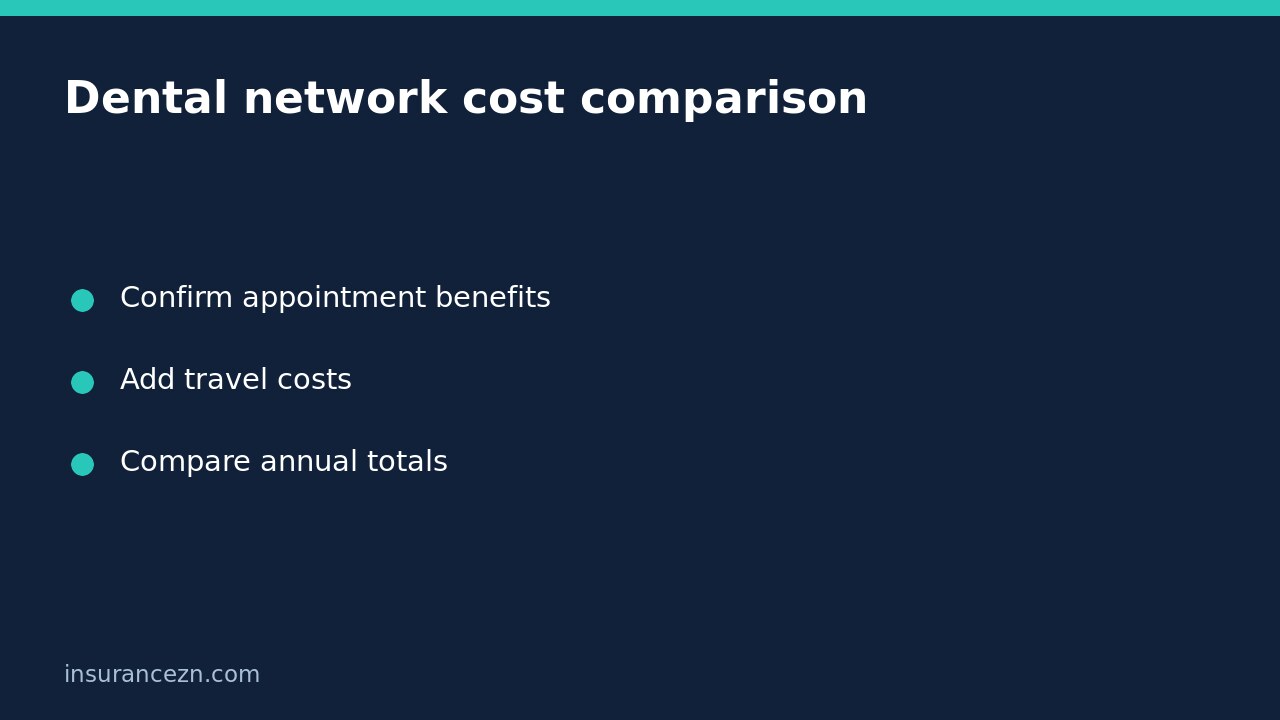

A dental provider offer is not automatically the cheaper extras option if using it means travelling further, paying parking fees or buying a more expensive policy. Compare the amount you would actually spend on the same planned care, including the cost of reaching the clinic. First confirm that the advertised arrangement applies to your exact policy, dentist, location and appointment items.
This is general information for Australian readers, not personal financial advice. Benefits depend on your policy, waiting periods, limits and insurer assessment. Read the policy booklet and any applicable Product Disclosure Statement (PDS); this comparison does not establish entitlement.
Separate provider recognition from the advertised offer
Start with two questions for the insurer: is this practitioner recognised for ordinary extras claims, and does the particular advertised provider arrangement apply to my appointment? Do not treat those questions as interchangeable. Ask the clinic to confirm who will perform the treatment, where it will occur and which item numbers will be billed.
If an offer mentions selected treatments, ask for the included items and any conditions in writing. A quoted check-up arrangement should not be stretched into a promise about fillings, imaging or later work. Record the offer’s validity dates and ask whether booking now but attending later changes eligibility.
The government overview explains that extras policies differ and that service, annual and lifetime limits can apply. It does not establish the terms of any particular dental network. Those must come from your insurer and the clinic.
Price the same appointment at each clinic
Request an itemised quote from the closer clinic and the proposed network clinic. Compare like-for-like items, not a consultation at one practice against a larger treatment package at another. Ask your insurer for an estimated benefit for each quote using your current remaining limits and intended service date.
- Record the practitioner and clinic identifiers used for the estimate.
- Separate the clinic fee, estimated benefit and expected patient payment.
- Flag additional treatment that is not yet quoted.
- Check whether previous claims or shared limits affect either estimate.
For the underlying item-by-item method, use our dental extras premium and item-code worksheet. The additional task here is deciding whether the location-dependent offer still saves money after access costs.
Add travel before calling the larger benefit a saving
The following figures are hypothetical, not insurer quotes. Suppose both clinics quote $220 for the same agreed items. Your closer clinic has an estimated benefit of $100, leaving $120 payable. The alternative clinic has an estimated benefit of $150, leaving $70 payable. On the treatment bill alone, the second option appears $50 cheaper.
Now suppose the return trip to the closer clinic costs $10, while reaching the alternative costs $65 in fares and parking. Your totals become $130 and $135 respectively. The larger benefit has not produced the lower cash cost. Check your own transport costs rather than adopting these invented amounts.
Record time away from work or caring responsibilities separately. Do not assign them an automatic dollar value unless that reflects your actual circumstances. Also consider appointment availability and continuity of care; an apparent saving is not a reason to postpone clinically necessary treatment.
Compare annual premiums only when the policy changes
If both clinics can be used under your existing policy, the same premium appears on both sides and need not be counted twice. If accessing the offer requires switching or upgrading, compare the actual payable annual premiums as well as the planned appointment gaps and travel.
Include any lost combined-policy discount or change to other benefits you expect to use. Confirm waiting periods and transfer arrangements before relying on the new benefit. Do not assume a new policy restores already-used limits. Keep hospital cover unchanged in the comparison unless you deliberately intend to review it too.
Questions before committing
Does a provider directory guarantee the quoted benefit? Use it as a starting point, then confirm your product, practitioner, items and date. Save the dated response.
Should I count every possible future appointment? Base the main comparison on realistic planned care, with a separate scenario for uncertain treatment. Unused benefit maxima are not savings.
What if the treatment changes at the visit? Ask for an updated fee and benefit estimate before consenting where practicable. An earlier estimate does not approve additional items.
Sources
PrivateHealth.gov.au: private insurance and extras limitations; PrivateHealth.gov.au: policy comparisons and waiting-period basics.