
You open an insurance schedule and see an initial where you expected your full first name. Before assuming the policy is invalid or editing your online profile, establish which record is abbreviated. A short name printed on one document and an incorrect underlying customer record are different problems. The insurer needs to explain which one you have.
This is general information for Australian readers, not personal financial advice. Check the current PDS, schedule and policy conditions, and contact your insurer about your individual cover. This guide is a practical checking process, not a ruling on whether a particular name format affects a contract or claim.
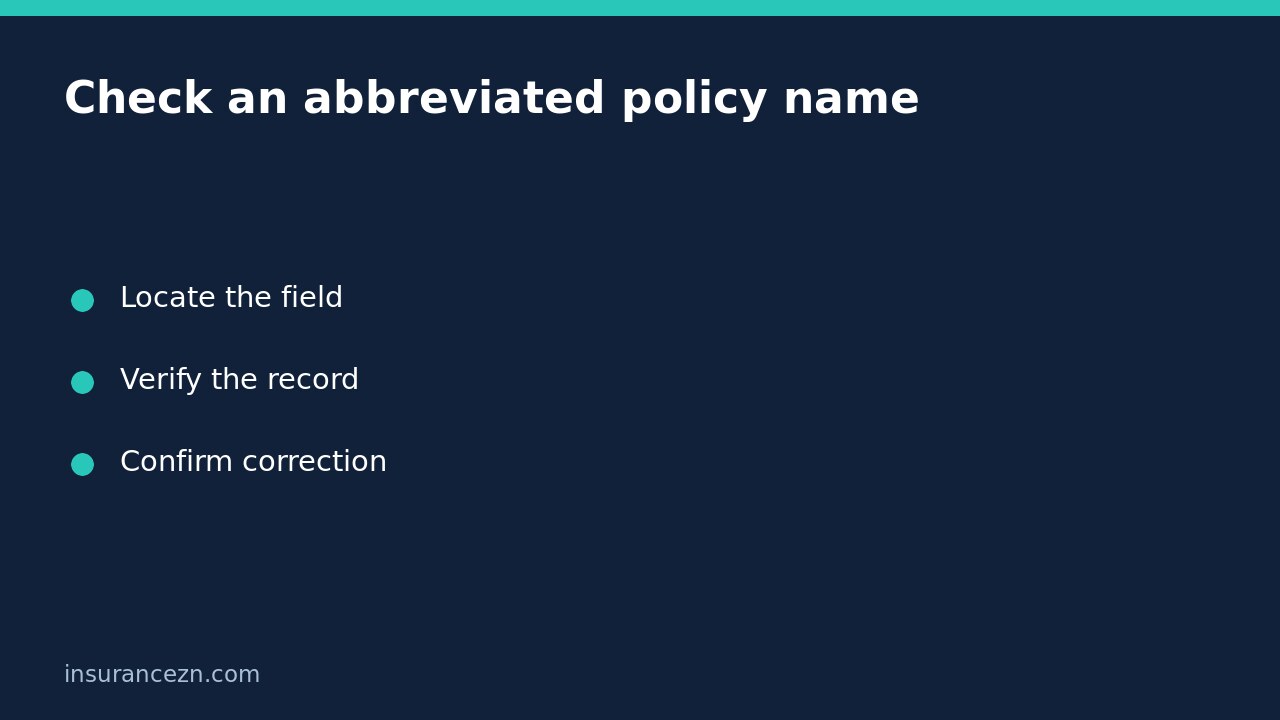
Locate the exact field, not just the short name
Start with the document title, policy number, issue date and field label. Is the abbreviation beside policyholder, insured person, correspondence name or account holder? A greeting in an email is not necessarily the same field as the insured name on a schedule. Record the label exactly rather than deciding what it means from its position on the page.
Look at the documents together, and identify the insurer and product before selecting a correction route. For example, Suncorp’s privacy page lists different statements for personal insurance, life insurance and other products. That product distinction helps locate the relevant process; it does not establish that every abbreviation is acceptable. Keep the issued schedule unchanged while you investigate. If organising the documents is the main difficulty, our policy document map provides a separate filing method.
Ask whether the full name is held correctly
Contact the insurer using a number or secure message route verified independently from your policy documents or its official website. Explain that you want to distinguish a display abbreviation from inaccurate personal information. Give the policy reference and the precise field, without sending identity documents in the first message unless the verified process calls for them.
A useful question is: Does your underlying policy record hold my full name correctly, and is the shortened name on this schedule only a document-display format? Then ask how that record identifies the person insured. Avoid asking only whether everything is fine. A general reassurance can leave the original ambiguity unresolved.
If the representative cannot see the document you mean, provide its issue date and relevant page through the agreed secure channel. Do not post a full schedule publicly to show the problem. It can reveal an address, policy identifiers and other household information unrelated to the question.
Separate correcting a record from changing who is insured
If the underlying record is wrong, describe the factual correction precisely. Replacing an incorrectly stored first name is not the same request as adding a different person to the policy. Similarly, expanding an initial is not automatically evidence of a legal name change. Tell the insurer what actually happened rather than selecting a convenient online change category.
As a provider-specific example, section 33 of Suncorp’s online terms describes access, update and correction requests, subject to applicable limitations. Its claim-online terms also warn that entering details there does not automatically update the policy record. These are Suncorp’s terms, not a universal workflow for every insurer. This privacy process does not itself decide insurance coverage, backdate a policy amendment or authorise a different person to make policy decisions.
Ask whether the proposed action corrects the existing customer’s record, changes a display setting or amends the insured parties. Request a clear explanation if those actions are being combined. Keep any coverage question separate so that a corrected profile is not mistaken for confirmation of every policy detail.
Use a small, accurate evidence pack
Prepare only what is needed for the verified correction process. A compact pack might identify the current entry, the requested entry, the policy reference and where the error appears. Ask which identity evidence is required and how to supply it securely. Do not assume an ordinary email attachment is the approved route.
- Preserve the original schedule and its issue date.
- Quote the actual abbreviated entry without silently expanding it.
- Explain whether the full name was supplied originally, if you know.
- Distinguish facts you can document from recollections of an earlier call.
- Keep the insurer’s response and any case reference with the request.
Do not alter the original PDF to make it appear that the insurer issued a corrected version. If a marked-up copy helps explain the issue, label it as your annotation and retain the unmodified original separately.
A worked example: one initial, two possible outcomes
Imagine a hypothetical customer whose schedule says J Patel. The portal profile shows Jamie Patel. The first task is not to add another insured person or buy a second policy. It is to ask which full name the policy record holds and whether the printed field deliberately uses initials.
One possible response is that the correct full name is held and the insurer explains the display format. Another is that the policy record itself is incomplete and requires correction through a verified process. Neither outcome should be invented in advance. Ask what written confirmation or reissued document will demonstrate the actual result, and whether anything else requires attention.
Close the loop on the document and the policy question
When a response arrives, compare it with the original question. Does it address the policy record, only the customer profile, or just the email greeting? If a new schedule is issued, check the relevant name and policy reference rather than assuming every field changed as intended. Save the new copy alongside the old one with a short explanation.
If the insurer declines a requested correction, ask for its explanation and the applicable privacy complaint route. Do not assume the refusal decides your separate coverage question. Ask separately how to raise an unresolved insurance concern through the insurer’s complaint process. Do not stop premiums or assume that a pending name enquiry extends claim deadlines. The practical endpoint is a documented explanation of the name record and a clear answer to any remaining individual-cover question.