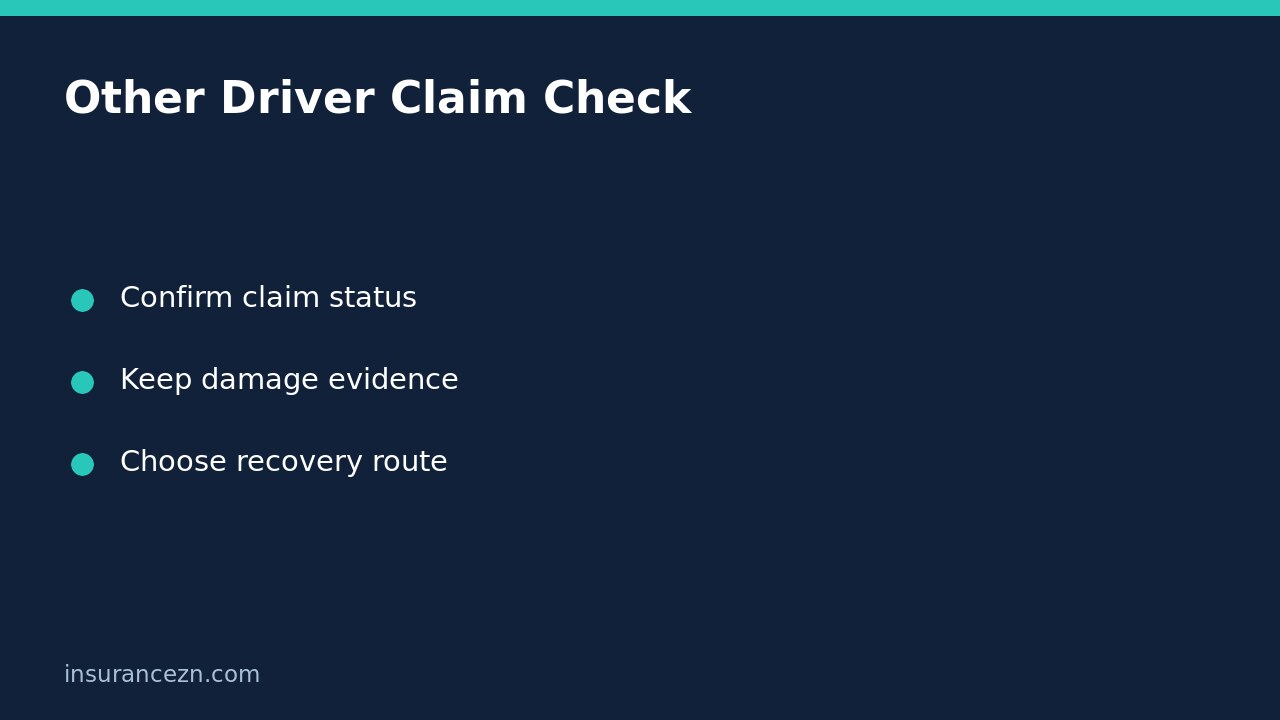

If the other driver gives you an insurer’s name after a crash, do not assume that insurer is already handling your damage. Ask whether a claim has actually been lodged, obtain the reference if available, and confirm the position directly through the insurer’s official contact channel. A named insurer, a lodged claim and an accepted liability decision are three different things.
This is general information for Australian readers, not personal financial advice. Cover depends on the policy, Product Disclosure Statement (PDS), exclusions and claim circumstances. The legal sources below describe NSW processes; obtain advice about the rules and deadlines applying where your accident occurred.
Separate the driver’s statement from the insurer’s position
A driver might say, ‘My insurance will pay,’ while still deciding whether to claim. Alternatively, the insurer may have opened a file but still be checking cover, fault or the repair costs. None of those statements establishes that your repair invoice will be paid.
Legal Aid NSW’s insurance guidance explains that an insured vehicle’s owner can choose whether to claim. If they do, their insurer handles that claim and should contact the other party. Start by finding out which stage you are actually at.
- Record the driver’s name, vehicle details and insurer information already exchanged.
- Ask whether they have lodged a claim and, if so, request the claim number.
- Contact the insurer using independently verified details, not an unfamiliar payment link.
- Ask whether there is a claim concerning this accident and what information it needs from you.
- Request written confirmation of any next action without assuming the insurer can disclose the policyholder’s private information.
Keep your own insurer informed
If you hold relevant property cover, ask your insurer about your options rather than waiting indefinitely for the other driver. Explain that their claim status is unconfirmed. Your insurer can explain whether you can claim under your own policy, what excess might apply and what recovery steps it would handle.
Legal Aid NSW notes that a policy may require accident notification even when you decide not to claim. Check your PDS. Do not treat an accident notification reference as proof that a damage claim has been accepted. Likewise, third party property insurance is not automatically cover for repairs to your own car.
For a separate issue involving a demand against you, see our car accident demand letter handover checklist. Sending correspondence to an insurer does not itself settle liability or stop a legal deadline.
Prepare the evidence whichever route you take
Your recovery options are easier to assess when the damage and costs are documented. Save dated photographs, the accident location, witness details, relevant correspondence and an itemised repair quote. Keep a contact log showing whom you spoke to, the reference used, the question asked and the promised next step.
Legal Aid NSW’s car accident overview identifies evidence of fault, resulting losses and repair costs as important. A repair quote supports the amount sought; it does not independently establish who caused the accident.
If the car is unsafe, avoid driving it. Ask about assessment and repair approval before authorising non-urgent work you expect an insurer to fund. Preserve evidence of urgent safety measures and their costs.
Example: a policy number but no claim reference
Suppose another driver provides a policy number and says they will report the crash. Several days later, you still have no insurer contact. Your practical task is not to keep resending the repair quote to the driver. Ask them to confirm whether they lodged a claim, check the position through the insurer’s official channel, and ask your own insurer about available assistance.
If no claim exists, obtain advice about seeking payment from the responsible driver or owner rather than assuming you can force their insurer to accept your invoice. Responsibility, insurance cover and a right to complain are separate questions. If contact is unsuccessful, keep the record and seek advice before taking court action.
What if the insurer will not deal with me?
There are limited circumstances where an uninsured motorist’s dispute involving the other driver’s insurer may be considered by AFCA. Legal Aid NSW discusses this pathway, including special situations where a policyholder cannot be found or has died. Do not assume every third-party dispute qualifies. Check current eligibility and limits directly with AFCA or a legal adviser; this article does not rely on a historical dollar threshold.
Quick questions before you wait longer
- Is there an actual claim reference, or only an insurer name?
- Has anyone confirmed acceptance, rather than merely receipt of documents?
- Have you checked notification duties and options under your own policy?
- Is your evidence preserved and your next follow-up recorded?
- Have you obtained advice about any approaching legal deadline?
A promise to claim is a reason to verify the next step, not proof that your repairs are already arranged.