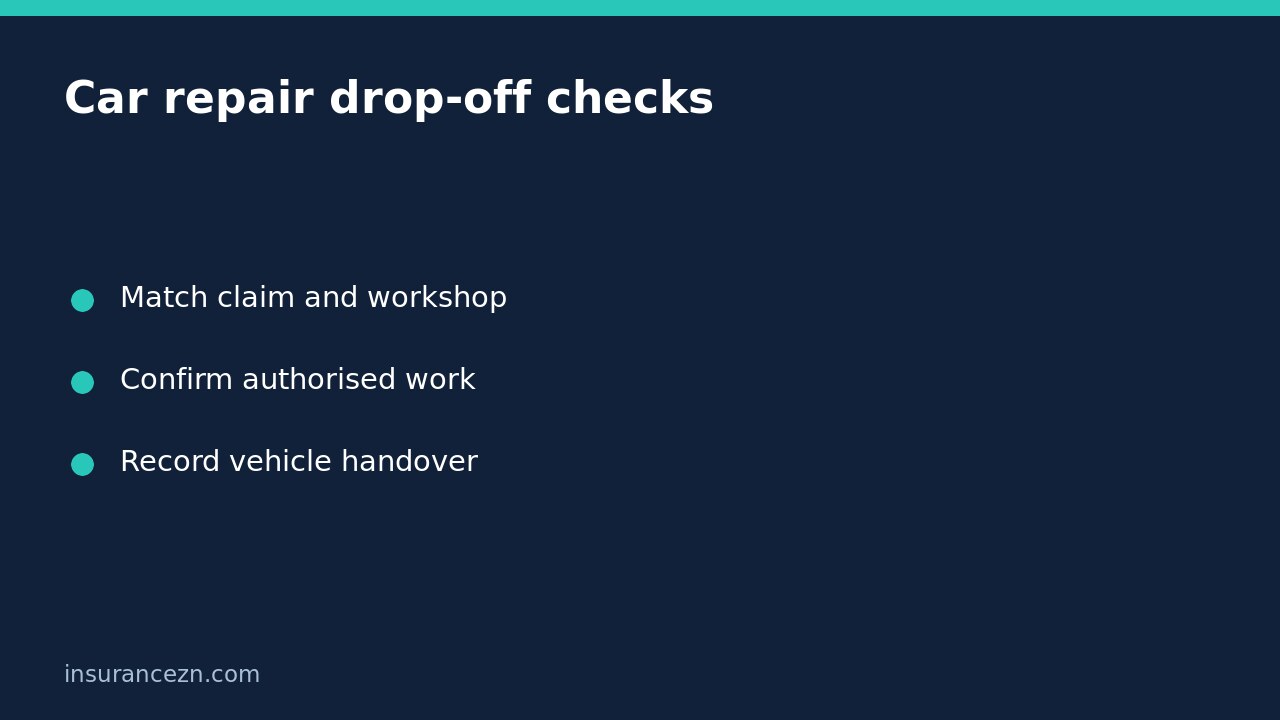

Before dropping your car at an insurance repairer, confirm three things separately: the workshop that should receive it, the purpose of the appointment, and the work the insurer has actually authorised. A booking message can establish an appointment without establishing approval for every repair or charge.
This checklist is for Australian motorists who already have a claim and need to organise the physical handover. It is not a recommendation to choose a particular insurer or workshop.
Match the booking to the existing claim
Start with the insurer’s official claim portal or a contact channel verified against your policy documents. Record the claim number, vehicle registration, workshop business name, street address, appointment date and booking reference. A familiar trading name is not enough if the repairer operates several branches.
As a provider-specific example, Suncorp’s comprehensive-car claims instructions say customers can manage vehicle assessments and view details of their authorised repairer online. That supports using the existing claim record to cross-check the destination; it does not establish the position under another insurer’s product.
Ask whether the visit is for inspection, quotation, disassembly, repairs or collection. If the workshop and portal show different purposes, resolve the difference before leaving the vehicle when practicable. Do not drive an unsafe vehicle to meet an appointment: discuss appropriate transport through verified channels.
Separate appointment confirmation from repair authority
Ask the insurer which repair scope has been approved and ask the workshop which job instructions it holds. Keep the latest written scope and its date. If assessment is still outstanding, describe the appointment as assessment rather than approved repairs.
- Which damaged areas or tasks are currently authorised?
- Does the workshop have the same version of the approval?
- Who will contact you if extra damage or unrelated wear is found?
- Will work stop pending any required additional approval?
- Is any proposed work being offered directly to you outside the claim?
Do not assume your signature on a workshop form only acknowledges delivery. Read whether it authorises diagnosis, repairs, storage or other customer-paid services. Ask for an explanation of unclear terms and retain a copy. Insurer approval and your agreement to buy separate work are different decisions.
Make a short condition and belongings record
Where safe and permitted, take dated photographs showing the vehicle’s exterior, relevant existing damage and dashboard readings. Note the odometer, fuel or charge level, number of keys handed over and any warning lights. Do not alter evidence or claim that a newly noticed symptom was caused by the accident without supporting information.
Remove ordinary personal belongings where practical, and ask how necessary accessories or equipment will be handled. Record items that must remain with the vehicle. These are practical handover precautions, not a statement that a policy covers missing belongings.
Request a receipt identifying the vehicle, receiving business, date and keys received. Keep original photographs and messages alongside the existing claim reference rather than starting another claim for an administrative mismatch.
Reconcile transport, timing and separate costs
In a hypothetical example, a motorist receives an inspection booking for Tuesday but assumes repairs and a hire car will begin that day. The workshop expects only an assessment, and no transport arrangement has been confirmed. The useful next step is to reconcile those three records, not to treat the booking as a promise of replacement transport.
Suncorp’s instructions list hire-car booking management as available if eligible. Eligibility, booking authorisation, vehicle collection and any customer contribution still need checking for the actual policy and claim. Ask who pays for towing or storage if either is proposed; do not infer payment from the existence of a repair booking.
For the financial side of deciding whether a small loss warrants a claim, see comparing a small repair claim’s excess with its actual benefit. That is separate from confirming where an already-lodged claim’s vehicle should go.
Final handover questions
Does a workshop booking prove my claim is accepted? No. Ask for the insurer’s actual decision and authorised scope. A booking, evidence upload and repair approval are different records.
What if the workshop changes? Ask the insurer to confirm the new receiving business, appointment and any transport arrangements under the existing claim. Keep both the old notice and processed replacement details so you can explain the change.
What should I leave with? A handover receipt, copies of anything signed, a clear next contact and an understanding of any unresolved approval or cost question.
This is general information for Australian readers, not personal financial advice. Cover, excesses, repair arrangements and benefits depend on the applicable policy, PDS, schedule and insurer’s assessment. This checklist does not establish coverage or payment approval.