
Fitting a roof rack, upgraded audio system or another car accessory creates two different insurance questions: is that equipment within the policy’s cover, and does the policy’s value basis adequately reflect the car with that equipment? Do not assume an installation receipt automatically increases the amount your insurer would pay.
This article is for Australian motorists reviewing a policy after installation, rather than comparing accessory brands. The useful outcome is a documented explanation of how the actual fitted equipment is treated, plus confirmation of any amendment the insurer accepts.
Separate inclusion from the value available
AAMI’s comprehensive car insurance summary says its policy includes the value of accessories and modifications fitted to the car, without needing to list them. The same summary describes accidental-damage repairs or replacement up to market value, if chosen, or the amount covered. These statements must be read together, not treated as a promise of an extra payment equal to every installation invoice.
That is an AAMI-specific summary, not an Australian-wide rule. Another policy may have different definitions, notification requirements or restrictions. Read the applicable Product Disclosure Statement, policy schedule and any supplementary documents. Ask how the equipment affects valuation, rather than assuming that inclusion means a separate pool of money.
Build a before-and-after equipment record
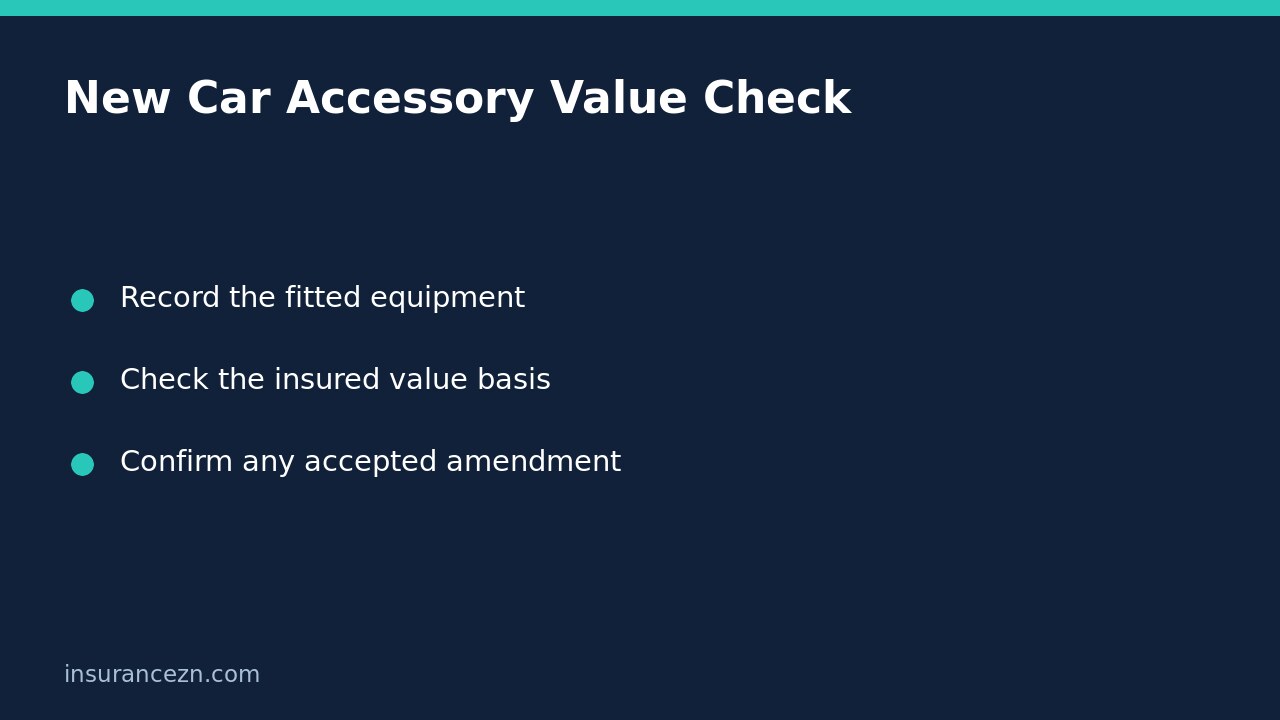
Start with what actually changed. Keep the invoice, installation date, item description, model identifiers and clear photographs of the equipment fitted to the car. Where relevant, retain installation or compliance documentation. Describe whether the work replaced factory equipment or added something new.
- Identify the vehicle and policy number.
- List each fitted item and the installation date.
- Separate equipment costs from fitting charges on the invoice.
- Record any previous equipment removed or traded in.
- Keep a copy of the existing schedule before requesting a change.
These documents explain the change; they do not themselves prove that the insurer accepts it or that the invoice amount is recoverable. Avoid adding up old and replacement equipment as though both remain on the vehicle.
Ask a valuation question, not just a listing question
A useful message is: ‘I fitted the attached equipment to the insured vehicle on this date. Under my current policy, how is this equipment treated, and is its value included within the existing amount covered or assessed market value? Is any notification, amendment or further evidence required?’
If the response says listing is unnecessary, follow up about the value basis. Ask whether the current schedule remains unchanged, whether a revised amount can be requested, and what premium or other conditions would apply if the insurer agrees. Do not replace an insurer’s assessment with the assumption that the vehicle’s value increased by the full retail installation cost.
Keep legal roadworthiness and insurance acceptance separate. An installer completing the job is not evidence that the vehicle meets every applicable requirement or that the insurer accepts every modification. Obtain the relevant confirmation through the appropriate channel.
Check the processed outcome against the request
Suppose your schedule shows an amount covered, then you pay for newly fitted equipment. This example deliberately uses no dollar figures: the key task is to establish whether that existing amount remains the relevant ceiling, whether market-value assessment applies instead, and whether an accepted change has actually been recorded.
Save the insurer’s response alongside any revised schedule. Compare the vehicle details, value basis, accepted amount, effective date, premium and special conditions. If an acknowledgement simply says the documents were received, ask whether the review is complete. A submitted request is not a processed policy amendment.
Do not backdate your own records to imply equipment was insured before acceptance. If damage has already happened, identify the incident date and seek assessment under the cover that applied then; do not describe a later requested increase as retroactive protection.
Quick questions before you close the file
Does an invoice establish the claim payout? No. It is evidence of the equipment and expenditure. Policy terms, valuation and the circumstances of a claim still matter.
Should I request a separate equipment payment? Ask how your policy treats the equipment first. Do not assume a separate benefit exists outside the insured vehicle value.
What if the answer remains unclear? Request the relevant policy wording and a written explanation tied to your vehicle. If a later claim is declined, our guide to requesting a written car-claim decision explains how to make that decision easier to check.
This is general information for Australian readers, not personal financial advice. Cover depends on the applicable policy, PDS, schedule, exclusions and insurer assessment. A recorded amendment does not guarantee acceptance or payment of a future claim.