
If you need a second windscreen repair, do not assume either that it is automatically excess-free or that your glass benefit is exhausted. Find out how the first repair was classified, which period of insurance it belongs to and what your actual optional-cover wording says. Then obtain the excess and repair instructions for the new damage before booking non-urgent work.
This is general information for Australian readers, not personal financial advice. Cover depends on your policy wording, schedule, applicable Product Disclosure Statement (PDS), limits, exclusions and claim assessment. The AAMI example below explains one published product summary; it does not establish identical rules across insurers.
Why the first repair’s classification matters
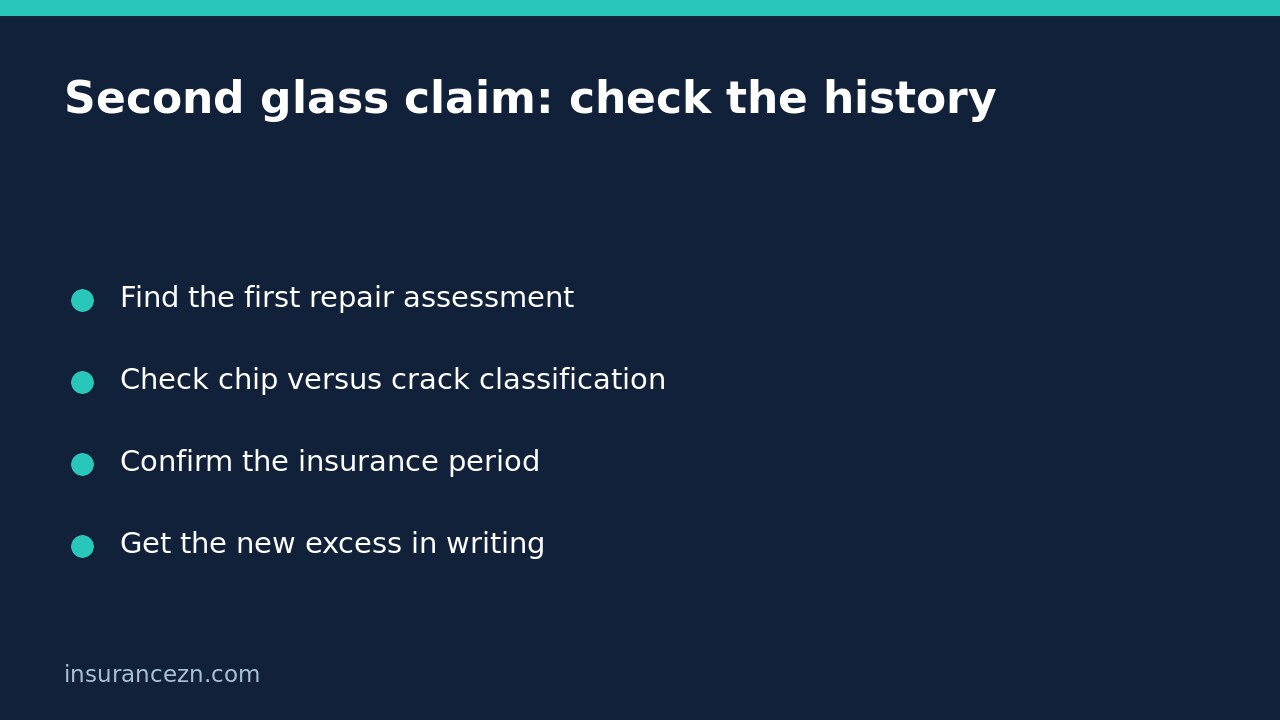
AAMI’s Windscreen and Window Glass Optional Cover page distinguishes an excess-free glass claim from a particular chip-repair benefit. Its summary says that when only the windscreen or window glass, including the sunroof, is damaged in an incident, the option provides one excess-free claim in the period of insurance. It separately describes one excess-free repair of a chipped, not cracked, windscreen that can be safely repaired, without losing that excess-free claim.
Those distinctions matter more than the casual description that you have already used glass insurance. A chip repair and a replacement may have different effects on the remaining benefit under that product. However, a receipt calling work a repair does not itself establish which policy provision the insurer applied. Ask for the processed claim classification rather than reconstructing it from memory.
Build a two-incident record
Locate the first claim number, incident date, repair date, assessment and repair invoice. Record whether an excess was paid and how the insurer explained the benefit used. Keep the vehicle and policy details alongside those records so a previous vehicle or earlier policy period is not accidentally mixed into the discussion.
For the new damage, record what happened and when, where known. If you only know when you discovered it, say so. Photograph it safely and ask a qualified repairer about safety and the proposed work. Do not drive with impaired visibility while waiting to resolve an administrative question.
- Which first claim and repair are being counted?
- Was it processed as an eligible chip repair, replacement or another type of claim?
- What were the relevant period-of-insurance start and end dates?
- Is the present damage a separate incident or a concern about the earlier repair?
- What does the insurer say remains available under the option?
If you are concerned about the earlier workmanship, explain that concern accurately and contact the insurer or repairer about the existing job. Do not invent a new incident to obtain a second repair, or assume every later crack is necessarily caused by the original work.
Do not substitute January for the policy’s own period
A headline saying one claim per year is not enough to determine when an entitlement becomes available again. AAMI’s explanatory text uses the phrase period of insurance. Check your schedule and the applicable wording rather than assuming a calendar-year reset, a repair-date anniversary or a reset when a monthly premium is paid.
Ask the insurer to identify the relevant period for each incident and explain how the previous assessment affects the new enquiry. If a renewal occurred between the incidents, provide both schedules. Renewal paperwork alone is not evidence that every new claim is payable or that all optional benefits have continued unchanged.
Work through a chip-then-crack example
Imagine a fictional driver who had a small chip repaired earlier in the insurance period and later discovers a different crack. Under the AAMI summary, an eligible chip repair can be treated separately from the excess-free glass claim. The driver should therefore ask how the first claim was actually processed before concluding that the later claim must carry the ordinary excess.
Now change the example: the earlier job was a full replacement. The driver needs a fresh explanation of the option’s remaining benefit and the excess applicable to the later incident. Neither example decides whether the present damage is covered, safely repairable or approved for replacement. Those are separate assessment and technical questions.
Do not interpret exhaustion of an excess concession as proof there is no possible cover under the underlying comprehensive policy. Equally, do not interpret a new claim number as confirmation that another excess-free replacement has been approved. Ask about both coverage and the amount payable by you.
Get the new repair instructions before committing
Send the insurer the two-incident record and ask for the applicable excess, approved repair pathway and any outstanding evidence. Identify other damage from the same incident: the AAMI optional-cover summary specifically refers to damage confined to glass. A workshop appointment or enquiry acknowledgement is not insurer authorisation for every proposed charge.
If you did not hold the option when the new incident occurred, adding it now does not establish retrospective protection. See our explanation of separating existing glass damage from a future cover amendment.
What should I retain? Keep the insurer’s written explanation, current assessment, repair paperwork and any excess receipt. If the records disagree, request a correction against the existing claim reference and confirmation of the processed result, not a duplicate claim.