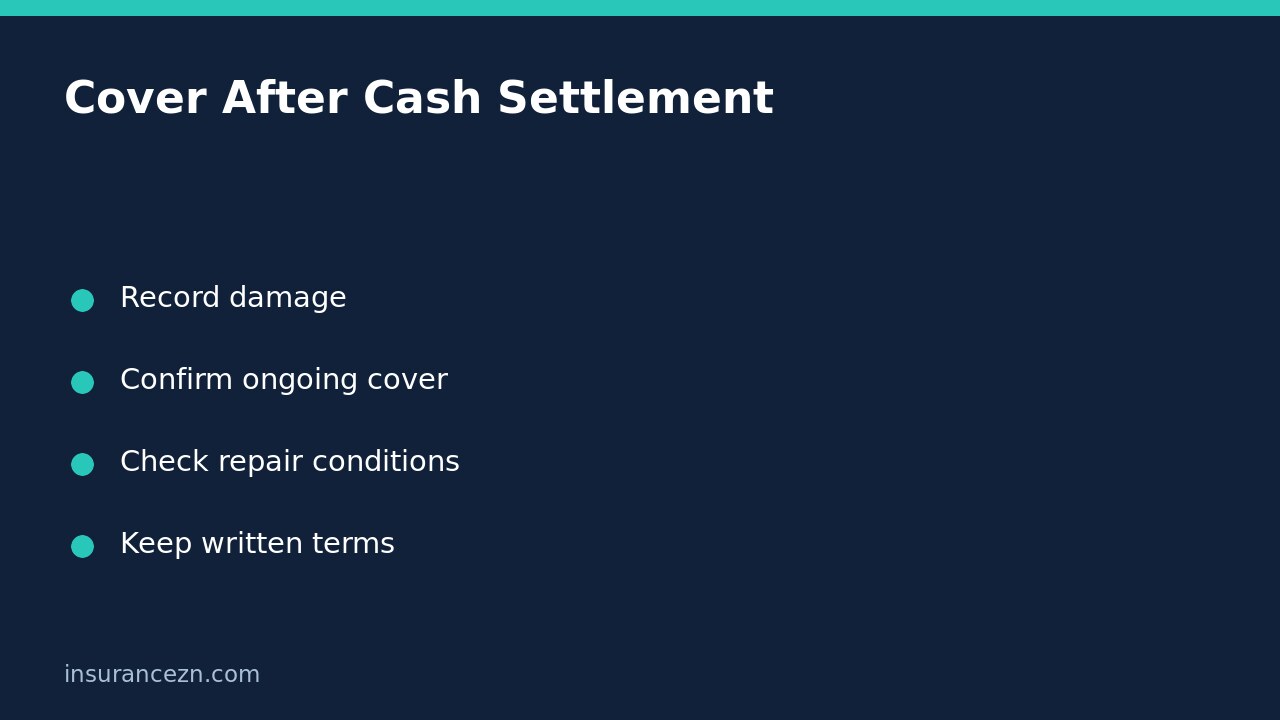

A home insurance cash settlement answers what the insurer is offering for an existing claim. It does not, by itself, answer whether the still-damaged home will remain insured while you organise repairs. Before accepting, ask for written confirmation of the cover available after settlement, including conditions that apply to the damage and repair work.
This is general information for Australian readers, not personal financial advice or legal advice. Your policy, Product Disclosure Statement (PDS), schedule, settlement terms and circumstances determine cover. Seek independent advice before signing a release or making a decision about a disputed claim.
Separate the existing claim from protection against another event
There are two different questions: what payment resolves the damage already claimed, and what insurance responds if another event occurs before repairs finish? A settlement figure can look sufficient while the second question remains unanswered. Do not assume an active direct debit proves that every risk at the property remains covered.
Legal Aid NSW warns in its Insurance claims after a disaster booklet that obtaining insurance for a damaged property can be difficult. It recommends checking insurability before accepting cash and discussing continuing insurance with the current insurer. This October 2023 publication is used here for practical planning, not as confirmation of current legal deadlines or nationally identical rights.
Describe the actual condition of the property
Prepare a short condition summary for the insurer or broker. Include the damaged areas, whether the building is occupied, any temporary weatherproofing, known structural concerns and the planned repairs. Refer to professional reports rather than guessing that a property is safe. Never enter an unsafe building just to obtain photographs.
Keep the claim number, latest scope of works and repair schedule together. If the damage description is inaccurate, resolve that issue before seeking cover on a mistaken basis. Our article on requesting factual corrections to an assessor report explains how to distinguish a verifiable error from a disagreement about technical opinion.
Ask for a written post-settlement cover explanation
Send the insurer specific questions rather than simply asking whether the policy continues:
- Will building and contents cover remain in force after this proposed settlement?
- Which existing damage, future events or consequences are excluded or restricted?
- Does the property being unoccupied or undergoing repairs change any conditions?
- What temporary protection, inspection or notification requirements apply?
- Will an endorsement be issued, and when will each change begin?
- What happens at renewal if the repairs are unfinished?
Ask the insurer to identify the relevant wording and any new conditions. If you approach another insurer, describe the known damage and planned works accurately. A quote based on an undamaged, normally occupied home does not establish that the real property is acceptable.
Use a simple repair-period scenario
Imagine a storm-damaged roof that has temporary protection in place. The owner receives a cash offer, but a builder cannot begin immediately. The practical question is not just whether the roof quote fits the offer. It is what cover is available during the waiting period, and what the policy requires if temporary protection deteriorates or occupancy changes.
Create a one-page record with three stages: awaiting repairs, work underway and work completed. Against each stage, record the insurer contact, the written cover position, required notifications and evidence of completion. Leave unanswered questions visibly marked as unresolved. This is a planning tool, not a prediction that any later damage will be paid.
Read settlement terms alongside the cover answer
Check whether the offer resolves the whole claim or only an identified part, and whether it includes other benefits such as accommodation. A statement that the policy continues is different from a promise to pay for additional damage discovered during repairs. Ask for clarification of both rather than treating them as interchangeable.
Cash settlement can leave you arranging contractors and managing repair problems. Obtain independent legal advice where a release, disputed scope or uncertain future cover creates significant risk. Do not assume you can reverse acceptance later. Keep the final offer, any deed, policy endorsements and written explanations together.
Quick questions before acceptance
Does an unchanged policy number guarantee unchanged cover? No. Read the actual schedule, endorsements and insurer explanation rather than relying on the number alone.
Should you cancel the old policy as soon as a new quote arrives? First confirm that replacement cover has actually been accepted for the disclosed condition, with an agreed start time. Resolve uncertainties with the providers before creating a gap.
What if nobody will confirm cover? Treat that as an unresolved decision risk. Ask a broker or independent adviser about options and seek legal assistance before accepting binding settlement terms.