
Before damaged carpet, plasterboard or household materials are removed, ask your insurer what evidence it needs and what cleanup it authorises. If photographs can be taken safely, create an organised before-and-after record. The aim is to show where damage was visible and what changed, not to diagnose its cause or delay urgent safety work.
This is general information for Australian readers, not personal financial advice or legal advice. Cover, exclusions, evidence requirements and reimbursement depend on your policy, Product Disclosure Statement (PDS), schedule and claim circumstances.
Put safety and insurer instructions ahead of photographs
Do not enter a restricted or unsafe building to collect evidence. Floodwater, electricity, unstable surfaces, contaminated materials and hidden hazards can make a photograph dangerous to obtain. Follow emergency-service directions and ask the insurer or an appropriately qualified contractor how inaccessible areas will be documented. A missing photograph is preferable to an injury.
Legal Aid NSW recommends talking to the insurer before cleanup and taking photographs before and afterwards. Its October 2023 disaster-claims publication supports that practical record-keeping approach; it is not used here to assert current legal deadlines or service availability.
Ask who will arrange urgent work, which materials may be removed, whether the contractor will supply photographs, and where invoices should go. Record the person giving instructions, the date and the specific task. Do not treat permission to photograph or clean one room as approval for a whole renovation.
Create a room-by-room photo sequence
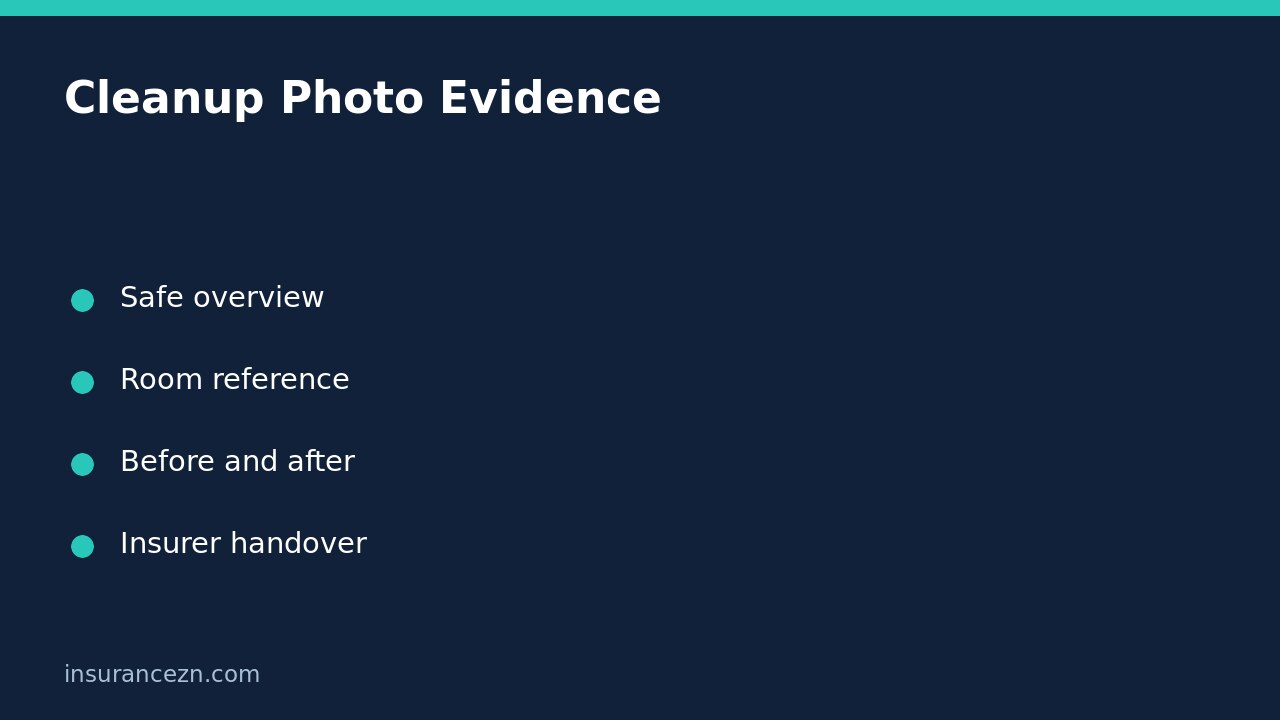
Use the same simple sequence wherever it is safe. Start with a doorway or other recognisable overview, then photograph the affected wall, floor or item, and finally the visible detail. Include an existing room reference such as a window or fixed cabinet so a reviewer can locate the damage without guessing.
- Give each room a consistent name: front bedroom, hallway or kitchen.
- Record which wall or floor section the image shows.
- Note the capture date and whether cleanup had already begun.
- Describe what is visible without claiming an unconfirmed cause.
For example, write ‘Hallway, wall beside linen cupboard, dark staining photographed before carpet removal’ rather than ‘Flood caused structural failure’. The first identifies an observation. The second presents a technical conclusion that a photograph alone may not establish.
Keep originals separate from your explanation
Retain original files and make a separate index with short descriptions. If you annotate an image to show a location, save that as an additional copy rather than replacing the original. Avoid filters or edits that could obscure the actual appearance. Keep an additional secure copy so a damaged or replaced phone does not become your only evidence store.
A useful index has columns for filename, room, visible condition, capture date and cleanup stage. Mark unknown dates as unknown; do not invent precise timestamps from memory. If a contractor supplies photographs, keep its accompanying email so the source and context are preserved.
Protect household privacy. Avoid including identity documents, personal medical details or unrelated valuables in wide views where possible. Use the insurer’s approved upload channel rather than posting claim photographs publicly.
Document what changed during authorised cleanup
Repeat an overview from a similar safe position after the work. Connect the before-and-after images using the same room reference. Add the contractor’s work description and invoice, distinguishing removal, temporary protection and permanent repair. An empty room does not by itself prove what was removed or why.
If newly exposed damage appears, stop treating it as routine scope expansion. Ask the contractor to document the discovery and notify the insurer before non-urgent additional repairs are authorised. For cleanup costs and booking decisions, see our debris-removal approval checklist. Photographic evidence and payment approval are separate tasks.
Send a usable handover, not an unexplained image dump
Send a short cover message identifying the claim, affected rooms, cleanup dates and attached index. Ask the insurer to confirm receipt and whether additional evidence or inspection is needed before remaining materials are removed. Keep that response with the image folder. Receipt is not acceptance of coverage or agreement to every repair.
Quick questions before removing materials
Must I keep damaged materials? Ask the insurer what it needs retained and how that can be done safely. Do not store hazardous waste or override professional safety instructions just to preserve evidence.
What if cleanup happened before photos? Explain the sequence honestly. Gather contractor records, earlier household photographs and invoices where available, and ask what alternative evidence will assist. Never recreate damage or label a later image as a before photograph.
Does a complete photo record guarantee payment? No. It helps explain the condition and work, but causation, policy coverage and reasonable repair costs still require assessment.
Source
Legal Aid NSW, Insurance claims after a disaster, October 2023, particularly the practical cleanup guidance. Check current policy instructions rather than relying on historical contacts or deadlines in this publication.