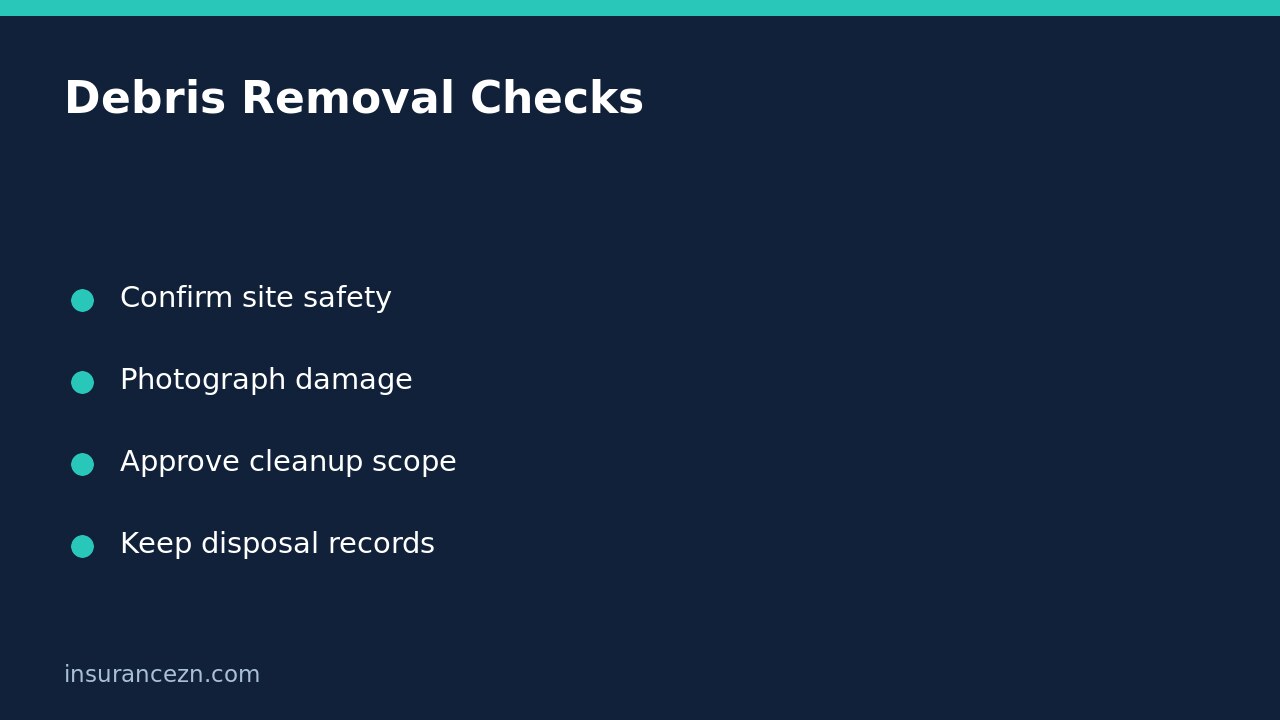

Before you book debris removal after an insured event, ask your home insurer what work it approves, what evidence it needs and which policy limit pays for the cleanup. A contractor being available does not mean its whole invoice will be covered. Your first priority is safety: do not enter an unsafe building or handle hazardous material to collect evidence.
This is general information for Australian readers, not personal financial advice or legal advice. Cover depends on your policy wording, Product Disclosure Statement (PDS), schedule, exclusions, limits and claim circumstances. Obtain qualified advice for your situation.
Separate urgent safety work from a full cleanup
A fallen tree, broken roofing and wet household belongings can create very different risks. Follow emergency-service directions and use qualified professionals for electrical, structural or hazardous-material issues. Do not disturb suspected asbestos, unstable walls or contaminated material yourself.
Contact the insurer as soon as practicable and describe the immediate danger. Ask whether it will arrange an emergency contractor, whether you should organise one, and what authorisation is required. Where immediate action is necessary for safety, keep a record of the circumstances and expenses; reimbursement still depends on the policy and facts.
The Legal Aid NSW disaster insurance guide recommends discussing cleanup with the insurer, taking before-and-after photographs and checking whether debris removal is covered. Its October 2023 edition is used here for practical preparation, not as confirmation of current legal deadlines or universal benefits.
Ask which limit pays for debris removal
Locate the relevant wording in the PDS rather than relying on the name of a benefit. Ask the insurer to identify the clause and explain how it applies to your accepted claim. Useful questions include:
- Is removal of building debris covered, and is damaged contents disposal treated separately?
- Is the benefit additional to the building sum insured, within it, or subject to another limit?
- Which demolition, transport and disposal charges are included?
- Does the quote include any uninsured work or items requiring a separate decision?
- Who approves variations if the contractor discovers hazardous material?
Request the answer in writing. A policy may distinguish demolishing a damaged structure from clearing loose debris, and the insurer may need an assessment before deciding. Do not assume council fees, specialist testing or every skip-bin charge are automatically payable.
Build a useful record without entering danger
From a safe position, photograph the affected areas and keep the original files. Record the date, room or outdoor location and what each photograph shows. If it is safe, capture both a wide view and a closer view so the insurer can place individual items in context.
Ask before discarding damaged belongings or removing materials an assessor may need to inspect. Where keeping something creates a health risk, explain that promptly and ask what alternative evidence is acceptable. Receipts, earlier photographs and a contractor description can help, but acceptance is not guaranteed. Never keep dangerous waste solely to support a claim.
Use a written cleanup scope, not a vague quote
For example, imagine storm damage leaves roofing sheets in a garden and water-damaged cupboards inside. A quote saying only ‘clear storm debris’ does not establish whether both jobs are included. Ask the contractor to identify the areas, materials, loading, transport, disposal and any specialist work separately. Send that scope to the insurer before accepting non-urgent work.
Confirm whether the insurer engages and pays the contractor or whether you will sign the contract and seek reimbursement. Clarify deposits, cancellation charges and who must approve additional work. Ask the contractor for the disposal records relevant to the job. Keep approvals alongside the final invoice so a later reviewer can match what was authorised to what was done.
Quick questions before the contractor arrives
Can cleanup start before an assessor visits? Ask the insurer. Safety measures and permanent removal may need different decisions; booking an inspection does not itself authorise disposal.
Does debris cover solve temporary housing costs? No assumption should be made. Accommodation is a separate question with its own policy conditions. If you cannot live at home, also read our temporary accommodation benefit checklist.
What if approval is unclear? Ask for a named contact, the exact outstanding question and a written response. Keep unsafe areas isolated, seek appropriate professional help and avoid signing a broad non-urgent cleanup contract on the assumption that insurance will pay.