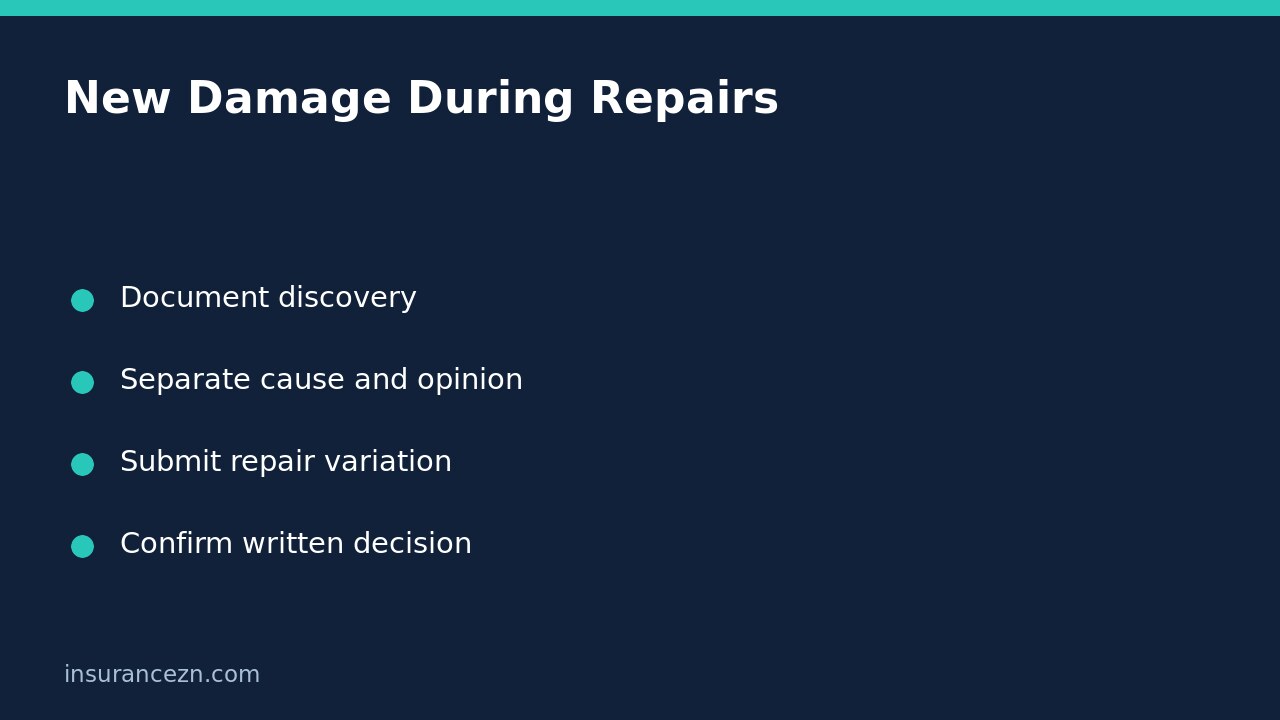

If a repairer uncovers additional damage during an insurance repair, notify the insurer promptly and request an assessment of the extra work. Do not assume the original approval covers everything newly discovered. A written variation should identify what changed, why the repairer considers it related to the insured event, and the proposed work and cost.
This is general information for Australian readers, not personal financial advice or legal advice. Your PDS, policy schedule, exclusions, settlement terms and claim circumstances determine cover. A repair variation is a request for assessment, not a guarantee of payment.
Record the discovery before the work moves on
Ask the contractor to record when and where the damage became visible, which work exposed it and whether the affected area is safe. Have the contractor take photographs where appropriate. You should not enter a worksite, touch wiring or remove materials to get your own pictures.
Keep the original approved scope and the new evidence together. Use clear location descriptions such as ‘kitchen, external wall behind removed cabinetry’ rather than ‘more water damage’. Ask what can safely wait for inspection and what immediate protective action is needed. Tell the insurer if delay could expose people or property to further harm.
Distinguish discovery from the cause of damage
Finding a problem during repairs does not establish that the insured event caused it. The insurer may need to distinguish storm-related water entry from earlier deterioration, or newly visible damage from something outside the original claim. Ask the contractor to separate observed facts from professional opinions.
For example, in a hypothetical storm claim, removing a ceiling reveals wet insulation and damaged framing. Useful evidence would identify the affected area, the condition found and the basis for linking it to the storm. ‘Found after the storm’ alone is not a technical explanation. Where structural condition or contamination is disputed, ask whether an appropriately qualified specialist should inspect.
The Legal Aid NSW disaster claims guide discusses further damage discovered during repairs and the importance of expert reports. This October 2023 publication informs the practical process here; it should not be treated as a current nationwide statement of legal rights. Whether additional work is covered still needs to be established under the relevant policy and circumstances.
Ask for an itemised variation, not just a larger invoice
Request a variation document that can be compared with the approved scope. It should show:
- The original repair item and the additional damage now identified.
- The evidence supporting the proposed cause, including photographs or reports.
- The extra labour, materials and specialist work requested.
- Any original allowance that is being replaced rather than added again.
- The effect on the work sequence and expected completion date.
Send the document through the insurer or its nominated repair manager and ask for a reference number. Clarify who has authority to approve it. A tradesperson saying the work is necessary does not necessarily mean the insurer has agreed to fund it. Likewise, an appointment for reassessment is not a written approval.
Use a focused message to the claim manager
A practical request could read: ‘During the approved kitchen repairs, the contractor identified additional damage behind the removed cabinetry. Please assess the attached variation and photographs against the existing claim. Confirm whether an inspection is needed, which work may continue safely, and who will approve additional costs. Please explain any declined items with reference to the policy and evidence.’
Keep a copy of the message and any response. If you disagree with a report, distinguish an incorrect fact from a disputed technical conclusion. Our guide to requesting a factual correction to an assessor report explains how to make that distinction without treating every disagreement as a clerical error.
Check settlement and living arrangements separately
If you already accepted a cash settlement, do not assume the claim can simply be reopened. The agreement may affect responsibility for repairs and additional costs. Seek independent legal advice before agreeing to further settlement terms or signing a release where new damage remains unresolved.
If the variation delays your return home, ask separately how that affects any temporary accommodation benefit. Extra repair time does not automatically extend a dollar or time limit. Obtain written confirmation instead of relying on the builder to discuss insurance benefits.
Final checklist before additional work begins
Confirm that safety risks have been addressed, the new damage is documented, the proposed work is itemised and the insurer has provided a clear decision or inspection plan. If there is a dispute, request written reasons and use the insurer’s complaints process as appropriate. Keep disputed costs and agreed work clearly separated so the repair can progress where safe without obscuring what still needs resolution.