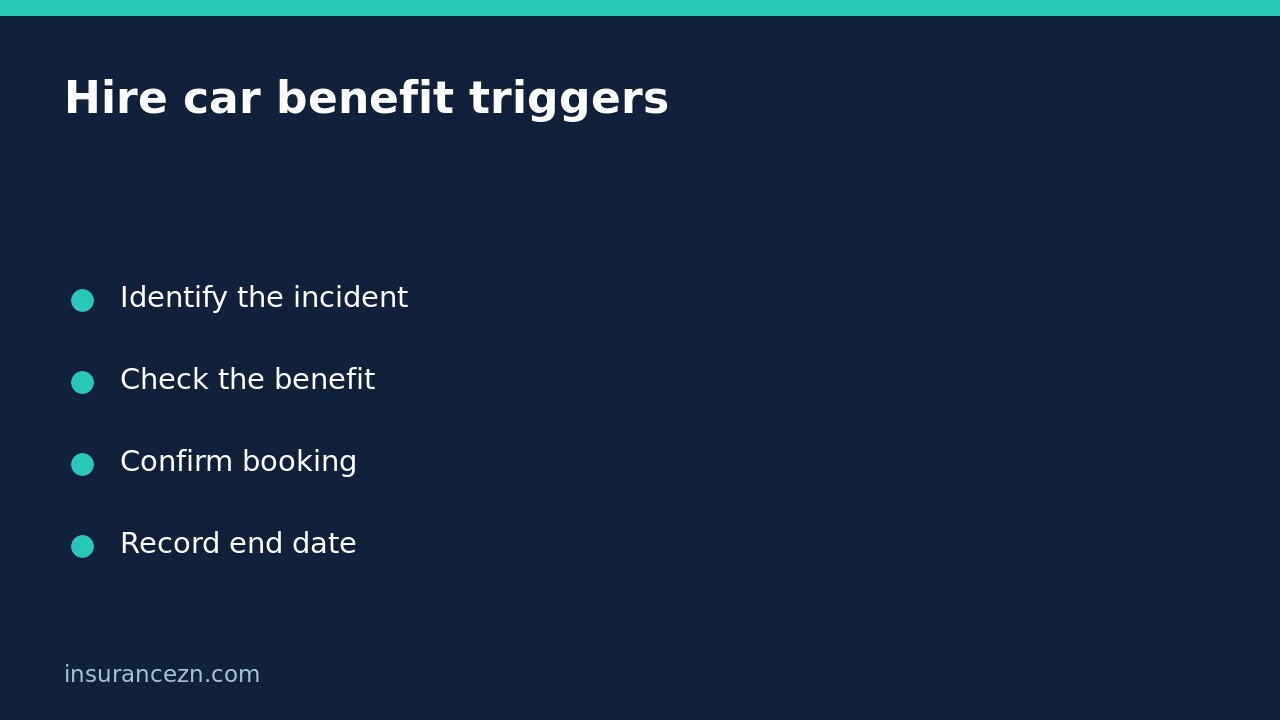

A car insurance quote saying it includes a hire car does not tell you whether that benefit applies after your particular accident. Compare the trigger first: theft, an accident attributed entirely to an identified other driver, and an at-fault accident can sit under different benefits. Then check the cover level, acceptance requirements and arrangements for getting the replacement vehicle.
This comparison is about your own motor policy’s replacement transport benefit. It is not a guide to recovering rental expenses directly from another driver or their insurer.
Separate three incidents before comparing prices
Create three rows on your comparison sheet: theft, an accident where the other driver is entirely at fault and identified, and an accident where you are at fault. Add a fourth row for disputed responsibility. For each quote, enter included, optional, excluded or awaiting confirmation. An unresolved answer is not the same as included cover.
As a provider-specific example, Budget Direct’s car insurance overview describes hire car eligibility after an accepted theft claim or an accident where someone else is entirely at fault and can be identified. Its comparison marks the no-fault hire car benefit as unavailable under the two third-party cover levels shown. The same overview separately describes an optional Accident Hire Car benefit for accepted at-fault claims, with hire for up to 21 days while the car is being repaired. These are that provider’s summary terms, not an Australian-wide entitlement.
Ask what happens while responsibility is unresolved
Being confident that you did not cause the collision is different from the insurer accepting the claim and confirming the hire benefit’s trigger. Ask what evidence is needed, whether a vehicle can be arranged before the decision, and who pays if the relevant conditions are not met. Do not promise a rental company that your insurer will pay merely because you have lodged a claim.
Keep the other driver’s available details, incident reference and insurer correspondence together. Do not obtain evidence in an unsafe way. If the insurer cannot yet confirm the benefit, record that uncertainty in the comparison rather than giving the policy full credit for immediate replacement transport.
Compare the booking process as well as the duration
For each insurer, request written answers to these practical questions before buying or booking:
- Must the insurer organise the hire car, or may I book one and seek reimbursement?
- What approval must I receive before incurring costs?
- Which vehicle category and daily cost are allowed?
- Are deposits, fuel, tolls, rental extras or other charges my responsibility?
- What happens if repairs take longer than the approved hire period?
- What event ends the benefit if the vehicle is written off rather than repaired?
These are questions to resolve in the applicable PDS and written response; the overview alone does not establish every answer. Separate a maximum advertised period from the actual approved dates for your claim. Also check the rental agreement, which can create obligations separate from your insurance claim.
Use a transport-gap example, not just a feature tick
Imagine two otherwise comparable quotes. One includes replacement transport after specified no-fault incidents. The other offers an additional benefit for at-fault accidents. A buyer who needs a car for essential travel should compare that additional scenario explicitly rather than marking both quotes simply as having a hire car.
Next, write down how you would travel if the claim decision is delayed, the driver cannot be identified, or the hire entitlement ends before repairs finish. This is a planning exercise, not a prediction that any particular policy will pay. Obtain the actual premium difference for equivalent drivers, vehicle use and excesses before deciding whether an option is worthwhile.
Repair arrangements also affect the practical timeline. Our guide to comparing repairer choice by quote approval rules explains a separate approval issue; choosing a repairer does not itself extend a hire car benefit.
Final checklist and common question
Does comprehensive cover automatically mean a hire car after any accident? Do not assume so. Check the insured incident and whether an optional benefit is needed. Compare the precise policy documents rather than relying on the word comprehensive.
Before committing, retain the quote version, relevant PDS section, optional-benefit selection and written explanation of unresolved questions. If you later claim, obtain the approved booking method and end date before relying on reimbursement. A submitted claim, an accepted claim and an authorised rental booking are distinct steps.
This is general information for Australian readers, not personal financial advice. Cover depends on the policy, PDS, certificate, exclusions, limits and insurer acceptance. A provider example is not an endorsement or a guarantee of claim payment.