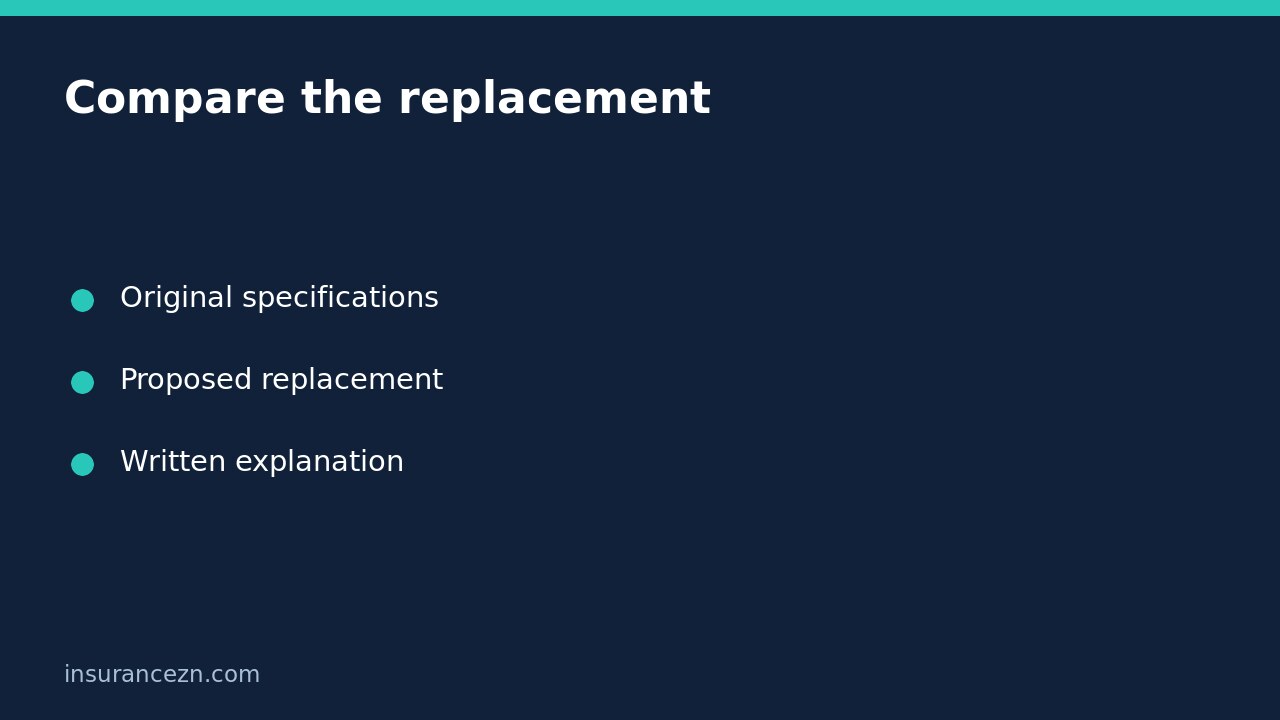

A new-for-old contents benefit does not necessarily promise the same brand. Before accepting a proposed replacement, compare what the original item did with the replacement’s type, standard and specifications, then check the wording of your own policy. A familiar logo is not a substitute for a functional comparison, and a different logo does not automatically make an offer unsuitable.
This is general information for Australian readers, not personal financial advice. Cover depends on your policy, Product Disclosure Statement (PDS), certificate, limits, exclusions and the insurer’s assessment. The provider example below is not a rule for every Australian policy or an endorsement.
Read what your insurer means by new for old
AAMI’s Home and Contents Insurance summary says it replaces or repairs contents with reasonably available new items or materials of the same, or similar if unavailable, type, standard and specification, but not brand, as when new. Its summary also directs readers to the PDS for terms, limits, conditions and exclusions.
That distinction matters when an older model has been discontinued. It does not establish that any currently sold item is equivalent. Nor does new-for-old wording, by itself, establish that the loss is insured, that the item falls within the contents definition, or that every requested upgrade is payable. First identify the applicable benefit and the settlement method being offered.
Make a specification sheet before comparing prices
Find the original model number from a purchase record, manual, photograph or manufacturer label if safely accessible. Record confirmed characteristics rather than reconstructing them from memory. Mark anything uncertain as unconfirmed, and ask what evidence the assessor will consider.
- Identify the item and its principal use, such as a freestanding washing machine used for household laundry.
- Record measurable features, such as capacity, dimensions, connection requirements and essential functions.
- Separate necessary compatibility from preferences, including colour or a preferred brand.
- Attach the proposed replacement’s model number and specifications so the comparison is reproducible.
For an appliance, check whether the suggested unit fits the existing space and connections. For electronics, describe an important input or compatibility requirement rather than simply asking for a newer model. Avoid assuming that a higher retail price proves a better match, or that a lower price proves an inadequate one.
Use a worked comparison to explain the difference
Suppose a damaged washing machine had a documented eight-kilogram capacity, but the proposed replacement is seven kilograms. This is a hypothetical specification comparison, not a coverage decision. Put those two figures side by side and attach the supporting documents. Ask whether a closer available match has been considered and which policy provision governs the decision.
Conversely, if the proposed machine has equivalent relevant specifications but a different brand, a request based only on brand preference may not address the actual wording. Explain any concrete difference that affects the comparison. Do not invent an essential feature merely to obtain a more expensive model.
Clarify delivery, installation and any upgrade payment
Before ordering, ask who will supply the item and whether the proposed arrangement includes delivery, necessary installation and removal of the damaged item. Request confirmation of any contribution you would need to pay and why. These are questions to resolve under the particular settlement, not benefits that every contents policy automatically provides.
If you prefer an upgrade, separate the insurer’s proposed settlement from the extra purchase you want. Ask whether an upgrade is possible, how any difference is calculated, and what happens to warranties and supply arrangements. Do not assume a store purchase made independently will be reimbursed, or that rejecting a supplier’s item creates an automatic cash entitlement.
Keep the decision and the purchase separate
A useful message is: ‘For claim reference X, please explain how proposed model B matches original model A under the replacement wording. The attached comparison identifies the capacity difference. Please confirm the agreed item, included costs and any amount payable by me before I order.’
A document upload receipt is evidence of delivery, not agreement with your comparison. Save the insurer’s actual response and the final model details. If the wider issue concerns an already completed repair, see our separate guide to recording defective insurance repairs.
Quick questions before you accept
Must I receive the original brand? Check your policy; the cited AAMI summary expressly distinguishes specifications from brand. Does a replacement offer prove the whole claim is accepted? Ask which items and costs are accepted rather than extrapolating from one offer. What should I save? Keep the original evidence, the comparison, the written decision and the final supply arrangements together.