
No. The government-set maximum waiting periods for Australian hospital treatment should not be treated as a universal ceiling for extras cover. Extras, also called general treatment or ancillary cover, has waiting periods set by individual health insurers. If you are planning orthodontics, hearing aids or another extras service, check that service’s actual rules rather than assuming everything becomes claimable after twelve months.
This is general information for Australian readers, not personal financial advice. Benefits depend on your policy, fund rules and any applicable PDS or other policy documents. Obtain confirmation for your circumstances before making a financial commitment.
What the official waiting-period guidance actually says
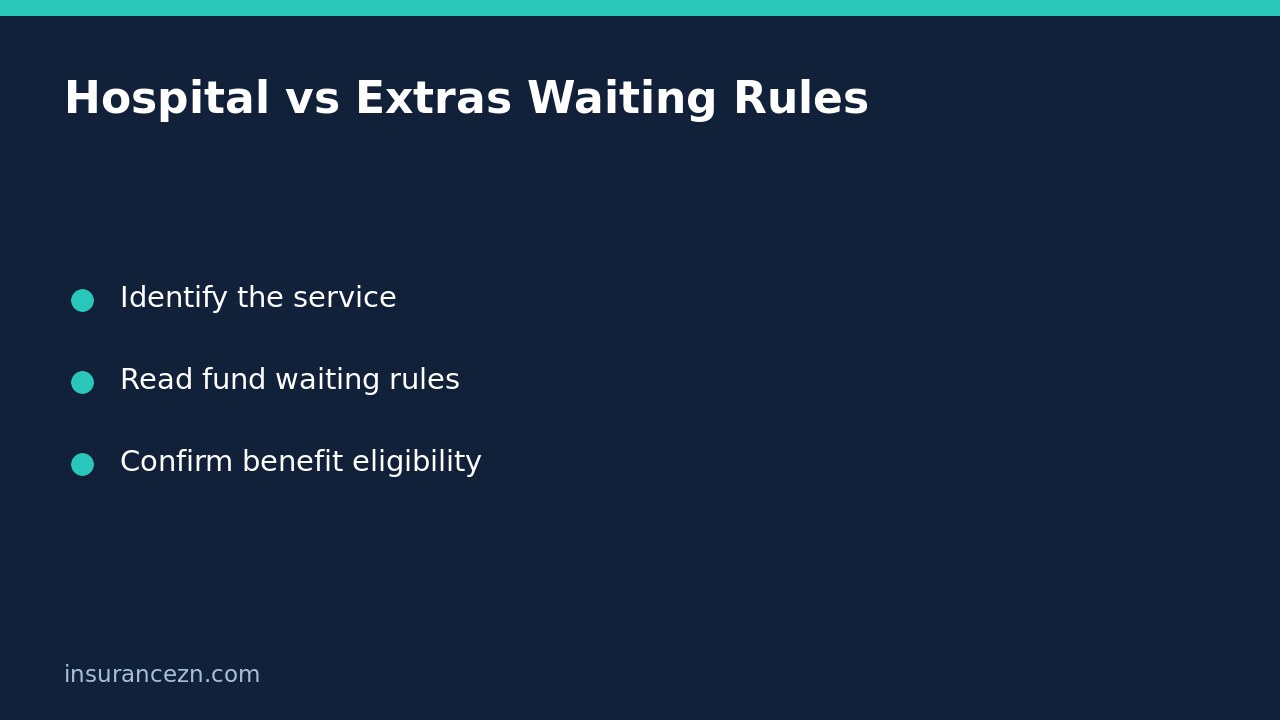
The Australian Government’s PrivateHealth.gov.au waiting-period guide separates hospital treatment from general treatment. It lists government-set hospital maximums, including twelve months for pre-existing conditions and pregnancy and birth, and two months for other specified circumstances. The page also explains a particular mental-health waiting-period exemption; that is not a general waiver for all services.
For extras, the same guide says individual insurers set the waiting periods. It describes common periods ranging from two to six months for services such as general dental, optical and physiotherapy, and up to twelve months or more for major items such as orthodontics or hearing aids. Those are broad descriptions, not a personal benefit confirmation or a universal timetable every fund must use.
First classify the treatment, not just the policy name
A combined hospital-and-extras membership can make the distinction easy to miss. One membership number does not make both components follow identical waiting rules. Ask the fund which component would pay for the particular service and which benefit category it falls under.
For example, a family considering braces should request the orthodontic benefit terms, rather than relying on a hospital-cover brochure’s waiting-period table. A person considering hearing aids should obtain the hearing-aid benefit terms rather than using the optical or general-dental waiting period as a substitute. The useful question is not simply whether the membership has been active long enough, but whether the waiting requirement for this exact benefit has been completed.
Build a service-specific confirmation record
Send the insurer a short written request with enough detail to identify the intended treatment. You can use this checklist:
- The insured person’s name and exact extras product.
- The service, proposed treatment date and provider’s item description or code, if available.
- The date the relevant cover started or changed.
- The waiting period that applies to that benefit and the date the fund records it as completed.
- Any conditions that still need to be satisfied before a benefit can be paid.
Ask for a response referring to the actual policy rather than a link to a generic sales page. Save the reply with the benefit schedule. If the answer only says that the person has been a member for twelve months, ask the fund to confirm the specific extras benefit separately.
Worked example: planning braces without assuming a ceiling
Imagine a parent has held combined cover for a year and is now reviewing an orthodontist’s treatment plan. They remember reading that hospital waiting periods cannot exceed twelve months and assume the braces must now attract a benefit. That reasoning uses the wrong rule set.
A safer approach is to ask the fund to identify the orthodontic waiting requirement, confirm the child’s recorded eligibility date and explain how benefits would apply to the proposed course of treatment. The family can then compare the fund’s response with the provider’s payment schedule before agreeing to costs. This example does not assume a particular waiting period, refund or payment arrangement; those details must come from the actual product.
Finishing a waiting period does not settle every benefit question
Waiting-period completion is only one eligibility check. An included service, an accepted provider, applicable benefit limits and the amount charged can still affect the result. A response confirming that a waiting period has ended does not itself promise full reimbursement or approval of every treatment item.
For a related distinction, see why recognised-provider status needs checking before booking an extras service. The service discussed there differs, but the administrative lesson is useful: check each condition rather than treating one favourable answer as approval of the whole bill.
Quick questions before you commit
Does twelve months of membership prove extras eligibility? Not by itself. Confirm the exact benefit’s waiting requirement and recorded completion date.
Does an advertised waiver settle the issue? Ask whether the offer includes your exact service and membership circumstances. Do not infer that a headline applies to every extras category.
Should necessary care wait for paperwork? Discuss clinical timing with the treating professional. Insurance administration should not replace medical advice or delay urgent care.