
An income protection waiting period ending does not necessarily mean money reaches your bank account that day. Before relying on a first payment to meet household bills, separate the period before benefits become payable, the payment cycle, claim assessment and bank processing. This is a cash-flow check for an existing policy, not a recommendation to buy a particular product.
This is general information for Australian readers, not personal financial advice. Cover and payments depend on your policy, PDS, schedule, exclusions and claim requirements. Examples below do not establish eligibility or guarantee a payment date.
Separate benefit accrual from payment arrival
The waiting period and the benefit period answer different questions. The waiting period concerns the time before relevant benefits can commence under the contract. The benefit period concerns how long benefits may continue, subject to ongoing eligibility. Neither label alone tells you when a first deposit will arrive.
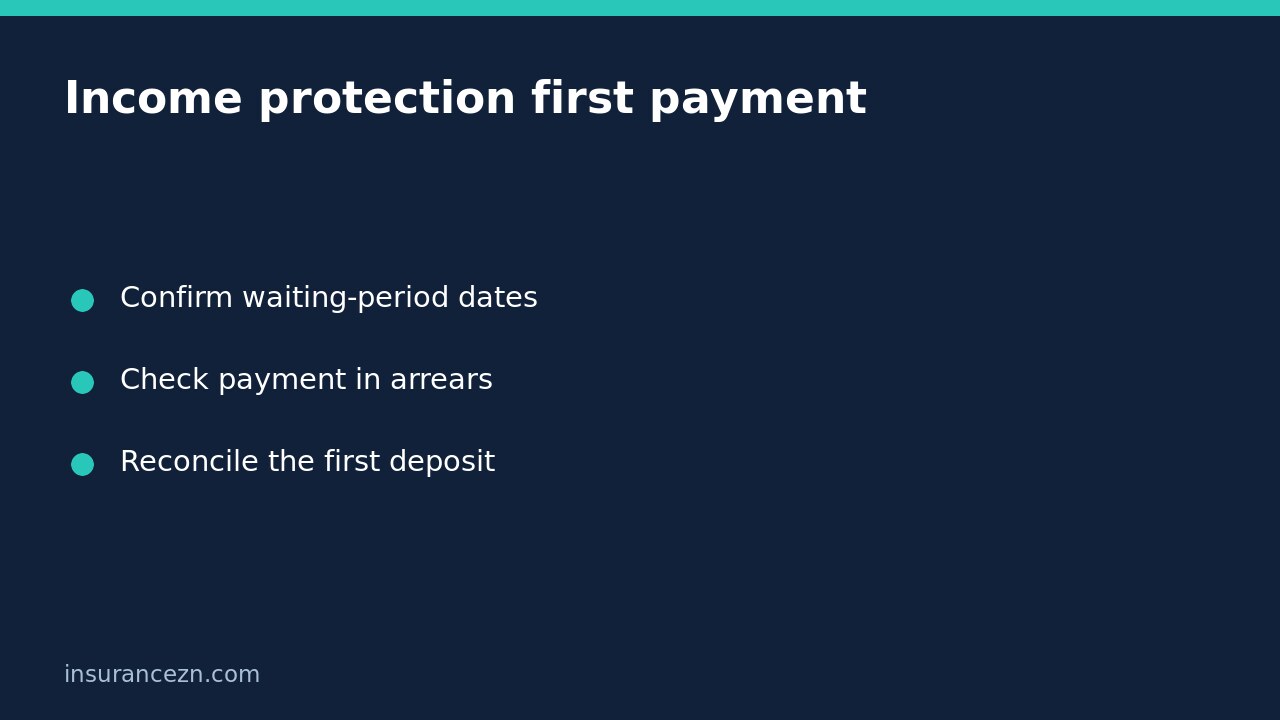
For a concrete provider-specific example, TAL’s income protection overview says its Totally Unable to Work and Partially Unable to Work benefits are paid monthly in arrears after the waiting period ends. Its example describes a four-week waiting period with the first monthly payment around the end of the second month from the waiting period’s start, unless another arrangement is agreed. This is TAL’s explanation of the product described on that page, not a universal Australian timetable.
A short FAQ definition can sound simpler than the detailed payment provisions. Read the payment frequency and timing sections together with the waiting-period definition. Your own contract may have different wording or additional conditions.
Ask for a claim-specific timeline
Find your current schedule and the PDS version applicable to your cover. Then ask the insurer or claims consultant to confirm the following in writing:
- The date it is using as the start of the waiting period and the evidence supporting that date.
- The waiting period selected on your policy and its assessed end date.
- Whether benefits are paid in arrears and what period the first payment would represent.
- Which medical, work-capacity and earnings documents remain outstanding.
- Whether the claim has been accepted, remains under assessment or requires another decision.
- The expected payment date, if one can be given, and any assumptions behind it.
A claim acknowledgement is not an acceptance decision. Similarly, confirmation that documents arrived is not confirmation that the evidence is sufficient or the payment has been released. Keep these stages separate in your notes rather than marking every positive email as payment approval.
Build a bill calendar without assuming a deposit
Imagine a worker whose schedule specifies a four-week waiting period. They have rent, groceries and loan repayments due before and after that period ends. If they budget as though the full monthly benefit arrives immediately at the four-week point, an arrears payment cycle could leave an unexpected gap even if the claim qualifies.
List essential bills by due date, then list confirmed available cash and any employer leave payments separately. Place an unconfirmed insurance deposit in a clearly marked pending column, not among available funds. Ask about the expected first payment before making commitments based on it. If bills cannot be met, contact the relevant provider early to discuss available arrangements without promising an insurer payment that has not been confirmed.
Do not assume the scheduled insured amount equals the amount payable. TAL’s overview says proof of pre-claim earnings is required and that a benefit may be reduced if those earnings do not justify the insured amount. Ask how your actual earnings and any relevant other payments affect your own assessment.
Reconcile the first payment rather than just spotting it
When money arrives, request or retain the payment statement. Match its covered dates, benefit type, assessed amount and any adjustments to the deposit. Ask the insurer to explain a mismatch under the existing claim reference. A deposit does not automatically establish entitlement for every later month: ongoing evidence and the contract’s continuation rules may still apply.
Keep your policy documents, claim correspondence and payment statements together. For wider preparation, our beneficiary-update confirmation guide illustrates a related administrative principle: sending information and having the correct outcome recorded are different stages. Beneficiary administration does not determine income protection entitlement.
Quick questions before relying on the money
Should I wait until the waiting period ends to contact the insurer? Ask about the claim process promptly rather than treating the end date as a reason to delay enquiries or evidence gathering.
Does a longer benefit period make the first payment earlier? Do not infer that. Check the separate waiting-period and payment-cycle provisions.
What is the safest budget entry while the date is uncertain? Record the payment as unconfirmed, retain the insurer’s latest estimate and update your bill calendar when assessment and payment details are actually confirmed.