
If ambulance protection is your main reason for buying extras insurance, compare an ambulance-only policy or an ambulance-service subscription where available before paying for a larger package. First establish whether your residence or concession status already gives you relevant assistance. A cheaper headline premium is useful only when the arrangement covers the services you need.
This is general information for Australian readers, not personal financial advice. Benefits depend on the policy, PDS, fund rules or subscription terms, including exclusions and waiting periods. In an emergency, seek urgent help immediately; do not delay an ambulance call to check insurance.
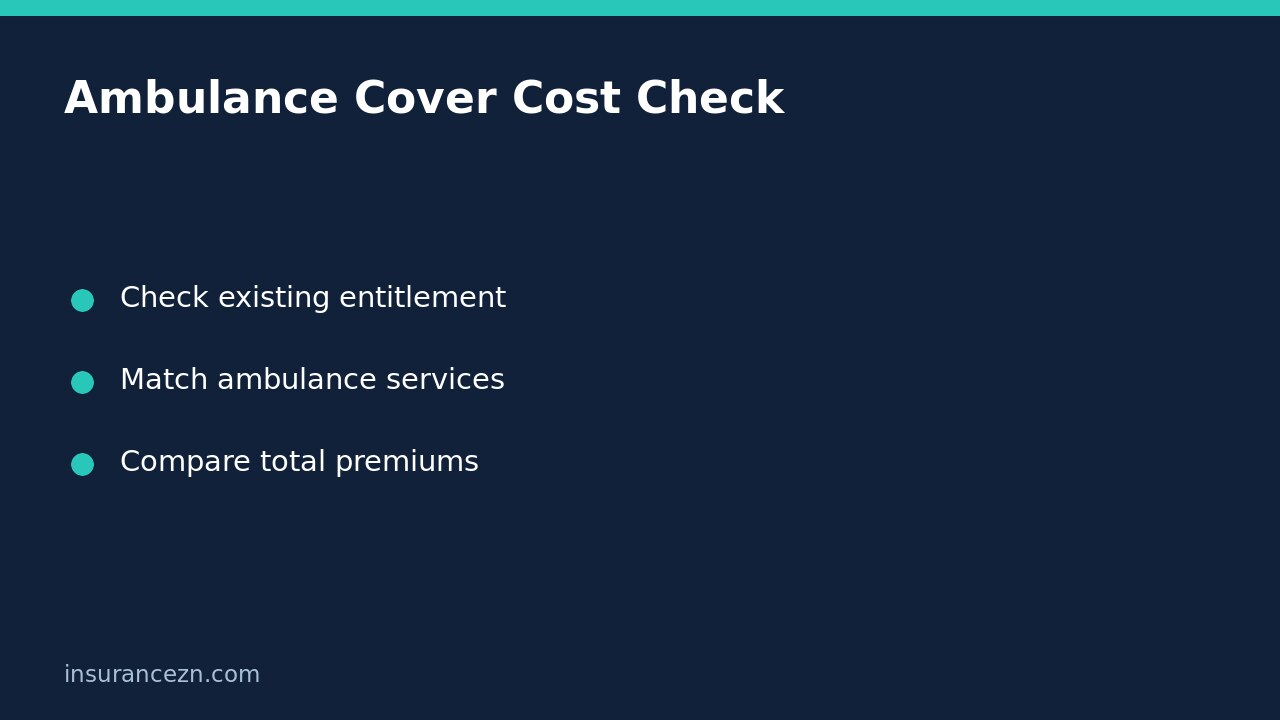
Start with protection you already have
The Australian Government’s ambulance information page explains that Medicare does not cover emergency transport or other ambulance services. It also describes different arrangements by state and territory, including residence-based assistance, concessions, insurer cover and subscriptions through some ambulance services.
Do not assume that living in Australia creates one national ambulance entitlement. Check your current address, the people who need protection and the particular concession card involved. Ask the responsible authority whether your entitlement applies to the service in question. Interstate travel needs a separate check rather than an assumption that your home-state arrangement follows you everywhere.
Next inspect any existing hospital or extras policy. Request its ambulance terms rather than buying another package simply because an advertisement mentions ambulance. Record who is covered, when cover began and whether there are outstanding waiting periods.
Compare three routes on the same basis
Your shortlist might contain your existing entitlement, standalone ambulance insurance or a service subscription, and an extras package that includes an ambulance benefit. Not every route is available in every location. The government overview also notes that some health insurers may reimburse all or part of an ambulance subscription; ask whether that applies to the exact product before counting both costs.
- Write down the total amount payable over the same comparison period, not just a weekly advertisement.
- Use the same household members and residential details for each quote.
- Identify any co-payment, benefit cap, waiting period or service restriction.
- Separate the cost of ambulance protection from other extras you would genuinely use.
- Check whether changing an existing package changes discounts on cover you retain.
For a broader package comparison, the article on combined costs of separate hospital and extras policies explains why the whole household premium matters. Avoid treating benefits you do not expect to use as an automatic saving.
Match the service before comparing the price
PrivateHealth.gov.au warns that ambulance arrangements vary. Its suggested questions include emergency versus non-emergency services, treatment without transport, interstate use, air ambulance, private providers, waiting periods and co-payments. An ambulance logo on a comparison card does not answer those questions.
Create one row for each relevant service and mark each option as confirmed included, confirmed excluded, conditional or not yet answered. Ask how the insurer or authority defines an emergency. Distinguish clinically necessary transport from simply arranging a convenient trip. Do not infer air transport protection from a statement about road ambulances.
If an adviser says an option is equivalent, ask for the clause supporting that answer. Keep the product name, document version and written response together. A quote or submitted application is not confirmation that protection has commenced.
A worked comparison without invented prices
Imagine a household that wants ambulance protection but does not expect to claim dental, optical or therapy benefits. It obtains a standalone quote and an extras-package quote for identical people and dates. Both are entered at their actual payable totals, with no assumed rebate or advertised maximum counted as money received.
If the extras package costs more, the household asks whether the additional services justify that difference and whether the ambulance terms differ. If the standalone option excludes a service the household needs, its lower price is not a like-for-like saving. This is a decision worksheet, not a prediction about ambulance bills or an instruction to choose either product.
Before cancelling or paying
Confirm the accepted start date, covered people, applicable conditions and payment record for the selected arrangement. Ask when the old benefit would end before cancelling it. Do not assume a bank payment means all membership details are correct, or that a new arrangement covers an earlier ambulance attendance.
Does ambulance protection require a full extras package? Not necessarily: the government overview identifies other routes, depending on where you live and your eligibility. Does the cheapest option cover every ambulance bill? No. Compare actual services, conditions and personal contributions, then retain written confirmation with your policy documents.