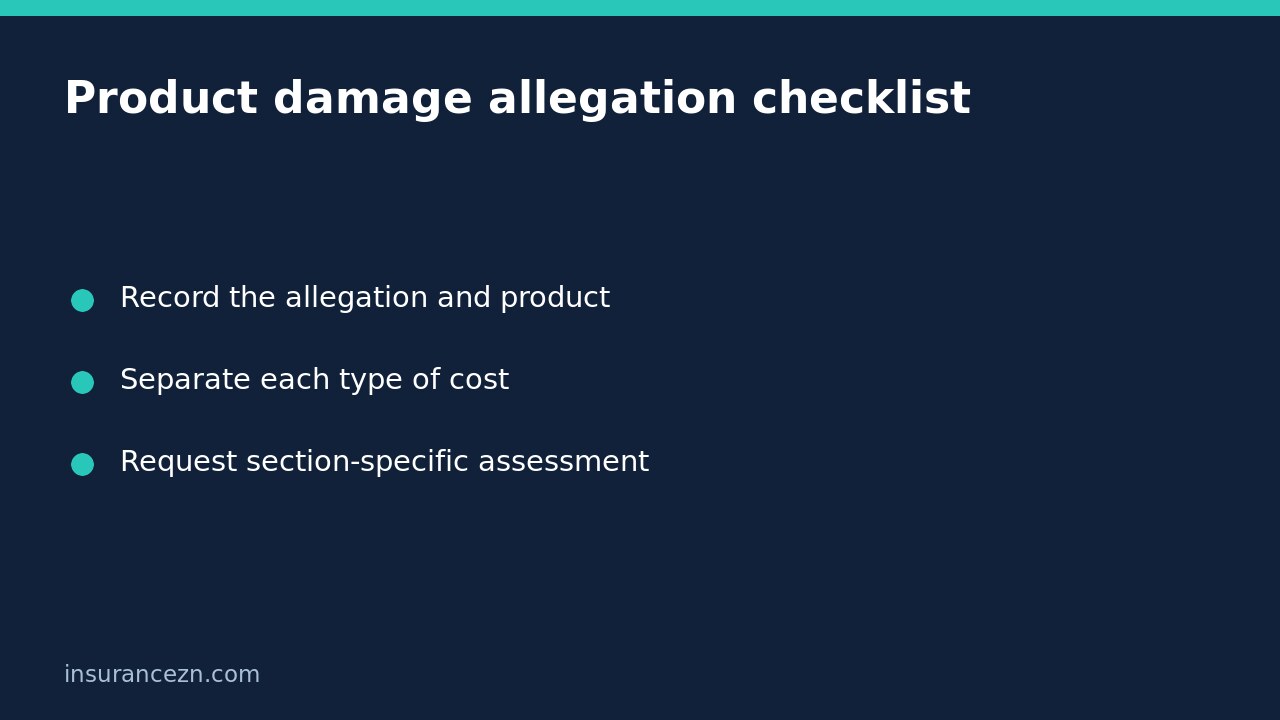

If a customer says a product you sold damaged their property, send your business insurer a factual incident summary and separate the different amounts involved. A refund for the product, damage to the customer’s belongings and losses to your own inventory are not interchangeable costs. Do not assume one accepted insurance section pays them all.
This is general information for Australian readers, not personal financial advice. Cover depends on your policy wording, Product Disclosure Statement (PDS), schedule, endorsements, limits and exclusions. Obtain advice about your own circumstances where needed.
Record the allegation without deciding the cause
Start with what the customer actually reported. Keep their original message, purchase information, product description and any batch or serial identifiers available. Record when they bought and used the item, what damage they describe and which photographs or documents they supplied. Distinguish their account from your own observations.
A hypothetical customer might say a cleaning product discoloured a benchtop and request both a purchase refund and payment for restoration. That report does not establish whether the product caused the damage, whether use instructions were followed, or whether a particular policy responds. Preserve the evidence rather than filling gaps with assumptions.
If there is an immediate safety concern, prioritise safety and obtain appropriate product-safety or professional guidance. Insurance administration is not a substitute for responding to a hazard or meeting applicable legal obligations.
Build separate cost lines before discussing cover
Prepare a simple list with a description, amount if known, supporting document and current status for each cost. Useful headings include:
- The customer’s damaged property: identify the affected item and any assessment or repair estimate.
- The product purchase: record a requested refund or replacement separately.
- Your remaining inventory: identify stock that is damaged, quarantined or otherwise affected without assuming a covered loss.
- Other proposed spending: list testing, transport, withdrawal or recall-related work separately, if relevant.
Mark estimates as estimates and unpaid requests as requests. Avoid combining a quotation, invoice and receipt for the same work into three separate losses. Do not authorise non-urgent spending on the assumption the insurer will reimburse it; ask what consent and evidence are required.
Ask which purchased section could respond
AAMI’s public liability overview describes public and products liability where business activities or products accidentally injure someone other than an employee, or damage their property. It lists contents and stock cover, theft and other business covers separately. This is an example from one insurer, not a universal promise about all business packages.
Use that distinction to frame questions about your own contract. Ask whether the alleged third-party property damage falls for assessment under your purchased liability section. Separately ask about the product refund, your inventory and any proposed withdrawal costs. A broad products-liability description does not itself establish that those commercial costs are covered.
Provide your actual role: did you manufacture, import, relabel, install or simply sell the product? Send relevant policy documents and ask the insurer what further information it needs. A supplier’s assurance or insurance certificate does not answer how your own policy applies.
Keep customer, supplier and insurer records aligned
Use one dated incident log. Record the customer’s requested outcome, documents received, supplier communications, insurer reference and outstanding questions. Keep original evidence even if someone later corrects an amount or description; add a clearly dated correction rather than silently replacing the first account.
Ask the insurer how to handle demands, proposed settlements and correspondence. Do not treat an acknowledgement or claim reference as acceptance of liability, approval to settle, or authority to incur costs. If you need to respond before receiving instructions, seek suitable advice rather than assuming the insurance enquiry extends a deadline.
When a decision arrives, reconcile it line by line with your cost list. Identify accepted, declined and still-pending items, any excess, and who is expected to pay whom. A decision on the customer’s property damage should not be casually extended to every other expense.
Questions to resolve before closing the file
Does a refund resolve the property-damage allegation? Do not assume so. Establish what the customer is still seeking and obtain appropriate advice about any proposed resolution.
Does a certificate prove this incident is covered? No. Our business certificate of currency checklist explains why proof of insurance should not replace checking scope and conditions.
What should remain on file? Keep the original allegation, product identifiers, evidence, itemised costs, insurer instructions and final processed outcome. Clear records help distinguish an uploaded document from a completed assessment and a proposed settlement from an actual payment.