
A pregnancy-related travel insurance limit needs to be checked against the whole itinerary, not just the day you leave Australia. Before comparing premiums, give each insurer your proposed departure and return dates and ask how its pregnancy wording applies throughout that period. Permission to board a flight and a doctor’s advice about travel are separate from insurance acceptance.
This is general information for Australian readers, not personal financial advice. Cover depends on the policy, PDS, exclusions, medical declarations, accepted terms and relevant dates. This article is not medical advice; discuss travel with your treating doctor or obstetrician and do not delay urgent care for insurance checks.
Build a dated itinerary before requesting quotes
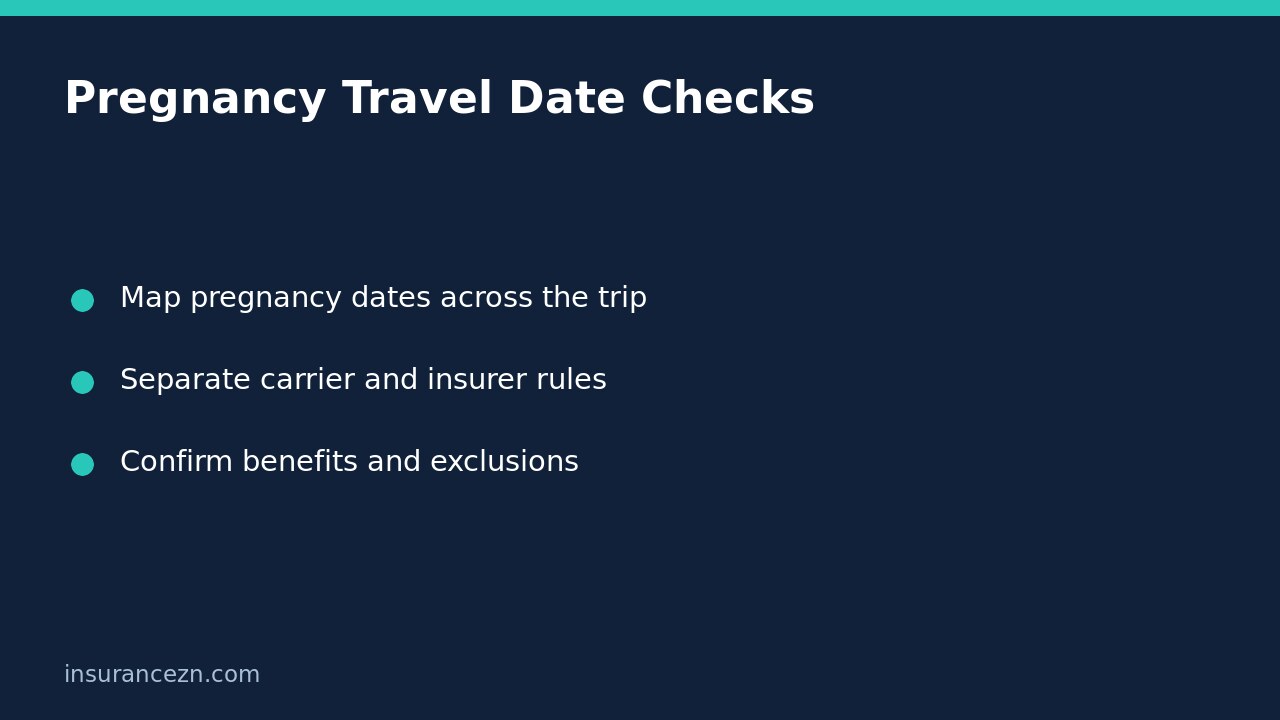
Use the pregnancy dates confirmed by your treating clinician rather than estimating from an app alone. Record the expected due date, outbound journey, connecting flights, destination stays and return journey. Tell the insurer about circumstances it asks you to disclose, including whether the pregnancy is multiple or involves IVF, and answer its medical questions accurately.
Ask the insurer which information it needs to apply its wording. Do not turn an advertised week limit into your own guarantee about a particular calendar day. Policies may define the relevant stage or covered circumstances differently. Ask for the clause and a written explanation that refers to your actual itinerary.
A fictional traveller could leave while a stated pregnancy-related benefit is available but return after its cut-off. The useful question is not simply whether pregnancy is covered. It is which events and costs would be eligible on each part of that journey, including the final days overseas and the trip home.
Separate three decisions that answer different questions
Smartraveller’s pregnancy travel guidance recommends discussing travel with a doctor and checking airline or cruise-line restrictions. It also tells travellers to ask insurers about the stage of pregnancy covered, pregnancy complications, premature birth and cancellation. These are different checks, not interchangeable approvals.
- Clinical advice: ask your clinician whether and when the proposed journey is appropriate for you.
- Carrier permission: ask each airline or cruise operator about its current rules, documents and date requirements for the actual journey.
- Insurance terms: ask the insurer which pregnancy-related circumstances and benefits it accepts under the exact policy.
A medical letter does not override an insurer exclusion. A carrier allowing boarding does not establish cover for treatment overseas. Conversely, having an insurance certificate does not oblige an airline to carry you. Do not use a single general week threshold for all three decisions.
Compare benefits separately, including the baby’s position
For each shortlisted quote, make separate entries for pregnancy complications, premature birth, routine pregnancy care, cancellation and changes to travel. Ask what is included, what is excluded, which limits apply and whether the pregnancy stage changes the answer. Do not infer that a medical benefit includes routine care or that a complication benefit includes every birth-related cost.
Ask separately about the baby: whether any newborn-related costs are insured, under what conditions and limits, and whether evacuation or return travel involving the parent and baby has specific terms. These questions identify a potential gap; they do not imply that every insurer offers these benefits. Keep a clear record when a benefit is unavailable rather than marking it as covered because another policy includes it.
For cancellation, ask which pregnancy-related reasons can trigger a benefit and what evidence is required. A doctor’s recommendation not to travel does not by itself establish that every cancellation expense is payable. Identify refundable amounts and relevant booking terms as well as the insurer’s requirements.
Use a comparison sheet that exposes date gaps
Put the same itinerary and declarations beside each quote. Record the policy version, pregnancy-related cut-off wording, the insurer’s interpretation for the dates supplied, accepted medical terms, benefit limits, exclusions and excesses. Compare actual quoted premiums only after identifying whether the policies address the risks you are trying to insure.
Smartraveller’s travel insurance overview explains that policies differ and recommends reading the PDS, considering health and trip duration, and including every destination. For a related itinerary check, read comparing annual-policy trip limits against your longest journey. A policy’s maximum trip length and its pregnancy-related conditions remain separate tests.
Recheck changed flights before relying on old answers
If your return date, destination or medical circumstances change, ask whether the previous written response still applies and what updated assessment or amendment is needed. A changed airline booking is not an accepted insurance extension. Keep the original response and any replacement terms so you can identify what changed and when.
Is being under a cut-off at departure enough? Not necessarily; confirm the wording across the whole journey. Does paying an extra premium prove every pregnancy expense is covered? No. Read the accepted terms and exclusions. Before committing to non-refundable arrangements, reconcile unresolved date or benefit gaps rather than treating a quote or enquiry acknowledgement as final acceptance.