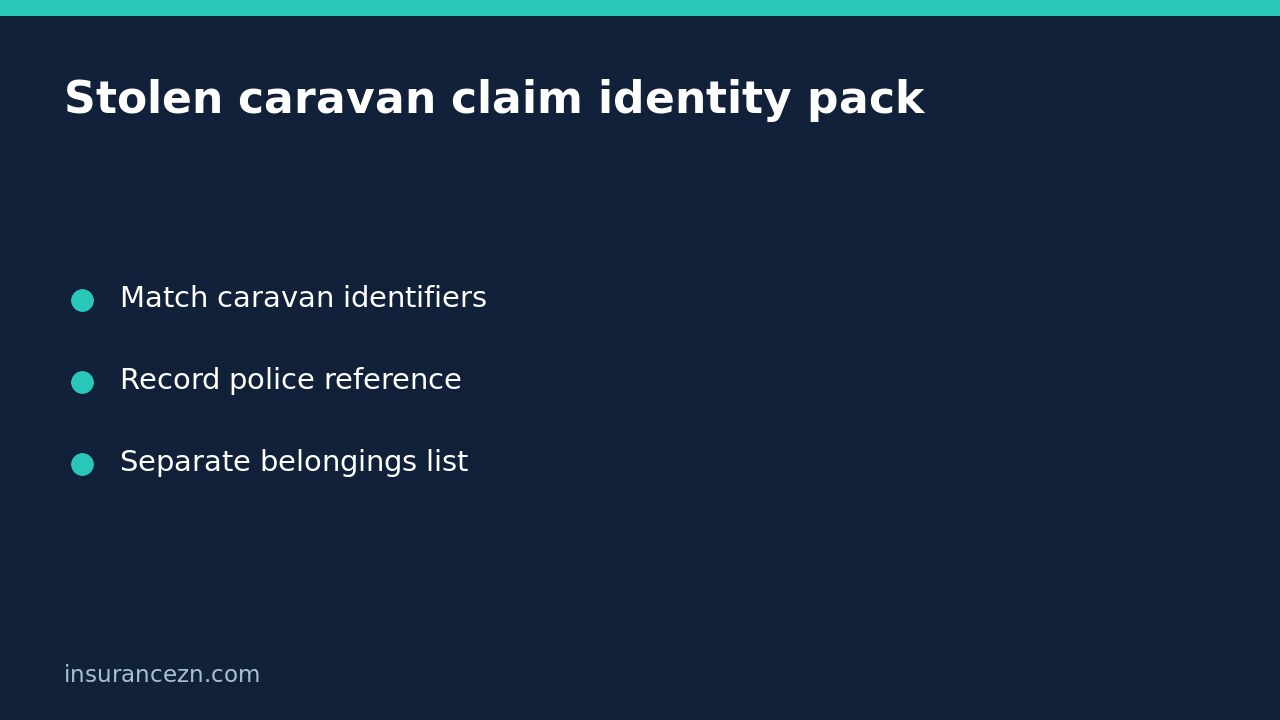

For a stolen caravan claim, build one consistent record identifying the missing caravan, the relevant insurance policy and the police report. Keep belongings inside it on a separate list. A police report supports the account of the theft; it is not an insurance claim, proof of every item’s value or confirmation that the insurer will pay.
This is general information for Australian readers, not personal financial advice. Cover depends on the applicable policy, Product Disclosure Statement (PDS), schedule, exclusions and insurer assessment. The process example below uses Suncorp’s published claims instructions, not a universal rule for every Australian insurer.
Report the theft without putting yourself at risk
If there is immediate danger, contact emergency services. Do not approach suspected thieves or attempt to recover the caravan yourself. Report the theft to police and preserve the reference and any instructions they provide. Do not delay reporting merely because a receipt or vehicle document is missing.
Suncorp’s motorhome, caravan and trailer claims instructions say theft losses need to be notified to police and a report obtained. They also say a claim can be lodged before everything is ready, with details added later. For another insurer, confirm its reporting and lodgement requirements directly through a verified contact channel.
Match the caravan, not just the towing car
A towing vehicle’s registration is not a substitute for the caravan’s identity. Assemble available documents such as the caravan registration record, purchase invoice, policy schedule and photographs of its identifiers. Write down the caravan’s registration, vehicle identification number or chassis identifier exactly as shown on the records. If you cannot confirm an entry, mark it unknown rather than guessing.
- Identify which document supplies each number.
- Compare the caravan description with the insured item on the policy schedule.
- Record the policy number and named policyholder.
- Keep the towing vehicle’s details separately if relevant to the incident.
- Flag spelling or number discrepancies for confirmation.
For example, if an old invoice shows a previous registration but the current registration record shows another, retain both and explain their dates. Do not silently overwrite the older record or conclude that the discrepancy makes the claim invalid. Ask the insurer what evidence it needs to reconcile the records.
Build a dated theft timeline
Record when and where the caravan was last seen, when its absence was discovered and who made those observations. Distinguish what you saw yourself from information another person supplied. If the exact theft time is unknown, describe the known interval instead of inventing a precise time.
Preserve existing photographs, messages, storage invoices and relevant security footage where you can lawfully obtain them. Keep original files and note who supplied each copy. Tell police and the insurer about potentially relevant footage without publicly posting sensitive location or identity details. Do not enter unsafe premises to collect evidence.
Keep the caravan and its belongings as separate claim questions
Create a second inventory for belongings believed to have been inside. Record descriptions, ownership, approximate purchase dates and available evidence. Mark uncertain items as uncertain. Do not assume that insurance on the caravan includes every personal possession, business item or accessory.
Ask the insurer which policy section, limits and evidence requirements apply to each group. A vehicle identity document establishes neither ownership nor cover for the contents. If another policy might be relevant, disclose that and ask how the claims should be coordinated rather than seeking duplicate reimbursement.
Confirm lodgement and reconcile later corrections
Suncorp says it provides a claim number and email confirmation after lodgement. Save those separately from the police reference. If confirmation does not arrive, check through the insurer’s verified channel before submitting a second claim. An incomplete form or saved draft should not be treated as confirmed lodgement.
When correcting an identifier, keep the original entry, the replacement and supporting document together. Ask the insurer to confirm that the correction has been applied to the existing claim. Upload acknowledgement alone does not establish that the record has been corrected or that cover has been accepted.
Our car accident evidence-register guide provides a useful document-tracking method; adapt the register to this theft rather than treating accident-specific evidence as a theft requirement.
Final handover checklist
Do I have two references? Track the police reference and insurance claim number separately. Have the identifiers been reconciled? Keep dated evidence for discrepancies. Is the belongings list separate? Request section-specific guidance. What remains outstanding? Record the insurer’s requested documents and next contact, without treating lodgement or a progress message as settlement approval.
Source
Suncorp: motorhome, caravan and trailer claim preparation and confirmation.