
When comparing Australian car insurance, check what each policy requires after an accident, even if you do not intend to claim. A low premium does not tell you whether you must notify the insurer about a minor collision, what information it needs or how to provide that notice. Compare the reporting clauses alongside the price and excess before choosing cover.
This is general information for Australian readers, not personal financial advice or legal advice. Cover, duties and claim outcomes depend on the policy wording, Product Disclosure Statement (PDS), schedule, circumstances and applicable law. Seek individual advice where needed.
Separate accident notification from making a claim
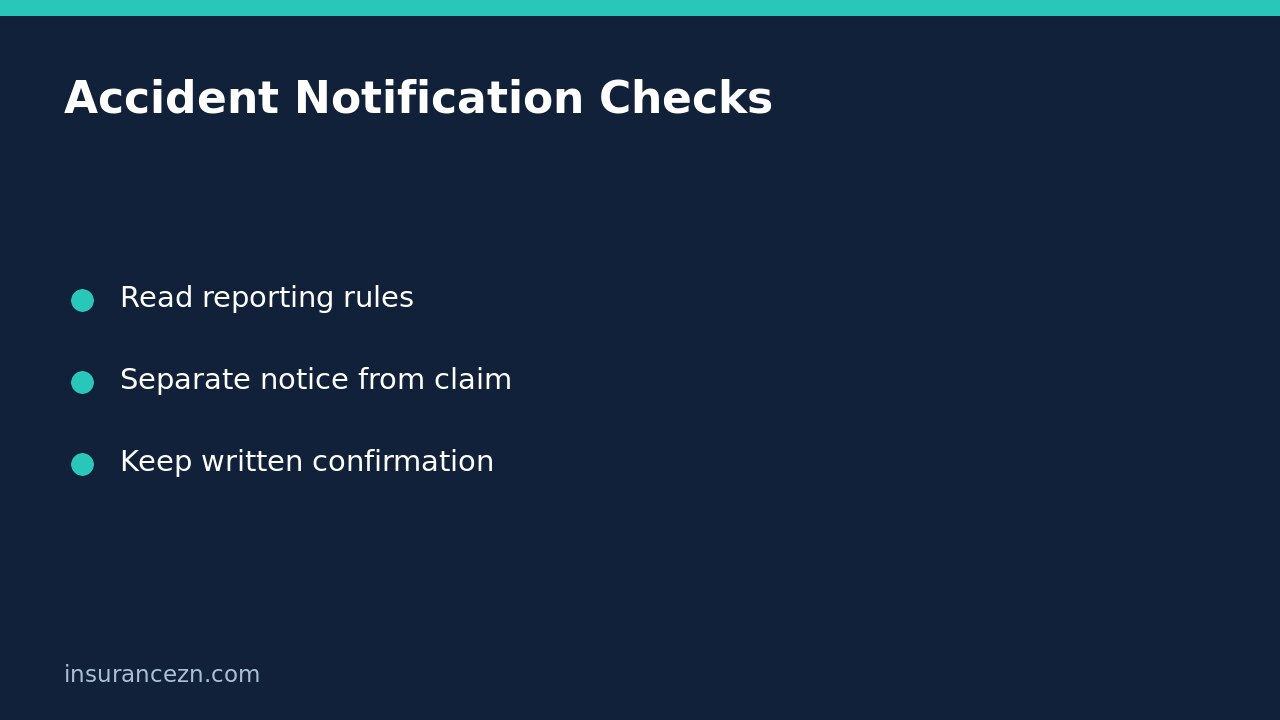
Notification tells an insurer that an incident occurred. Making a claim asks it to consider providing a benefit under your policy. Do not assume these are the same process, or that deciding against a claim removes every reporting obligation.
Legal Aid NSW explains that a policy may require you to tell your insurer about a car accident even if you decide not to claim. It recommends checking the PDS. Its court and dispute guidance is NSW-specific; this comparison checklist does not extend NSW legal procedures to other jurisdictions.
Also distinguish property insurance from compulsory third party insurance. The Legal Aid guidance explains that CTP concerns injury or death, not repairs to vehicles or property. Telling one insurer is not automatically notice to every relevant insurer.
Find the reporting clause in each competing policy
Download the current PDS for the exact product and retain the quote and any supplementary documents. Search for headings or phrases such as ‘after an accident’, ‘making a claim’, ‘your responsibilities’ and ‘tell us’. Read surrounding paragraphs rather than relying on a search result alone.
- What events must be reported: an accident, damage, a demand from another person, or only a proposed claim?
- What timing does the wording require? Record the actual words instead of inventing a universal deadline.
- Which reporting channels are accepted, and is an online incident report available?
- What documents or identifying details must be supplied?
- What does the policy say about repairs, admissions, negotiations or settlements before the insurer responds?
Create one row per insurer and record the document version and page reference. If a rule is unclear, mark it ‘confirmation needed’, not ‘no requirement’. A comparison website’s summary may not answer operational questions.
Use a minor-collision scenario to ask better questions
Imagine a low-speed parking collision where you believe the damage to your own vehicle is minor. You do not yet know whether the other driver will seek payment. This is an illustrative scenario, not a report of a real claim.
Ask each insurer: ‘If this happens while your policy is active and I do not want to claim immediately, must I notify you? How do I do that? Is notification recorded separately from a claim? What should I send you if the other driver later makes a demand?’
Do not treat a small-looking scratch as proof that no further cost can arise. Equally, do not assume that every notification automatically produces a particular premium increase. Ask how the insurer records incidents and answer its future application or renewal questions accurately.
Keep a usable incident record
After addressing immediate safety and any applicable reporting duties, retain a factual chronology, available photographs, the other party’s details and copies of relevant correspondence. Follow local requirements and do not put yourself at risk to gather evidence.
When contacting the insurer, state whether you are notifying an incident, seeking information or requesting a claim assessment. Ask for a reference number and written confirmation of the next steps. Keep the date, channel and substance of the conversation. A telephone assurance without a reference can be harder to resolve later.
If a letter of demand or court document arrives, seek prompt help and tell the insurer rather than ignoring it. Legal deadlines depend on the document and jurisdiction; this article does not provide a national deadline.
Final comparison checklist and common questions
Should I compare only the excess? No. Review reporting obligations alongside insured events, exclusions, benefits and costs. Our car insurance cost and excess review provides a related starting point.
Can I decide not to claim? You may be weighing that option, but first check any independent notification obligation. Legal Aid NSW also notes that a claim can involve an excess and may affect a no-claim bonus or future premiums; outcomes are policy-specific.
What should I save before purchasing? Keep the quote, current wording, reporting-clause references and written answers. If two products otherwise appear similar, clarity about how to report an accident is a practical difference worth considering, not a guarantee that either policy will accept a future claim.