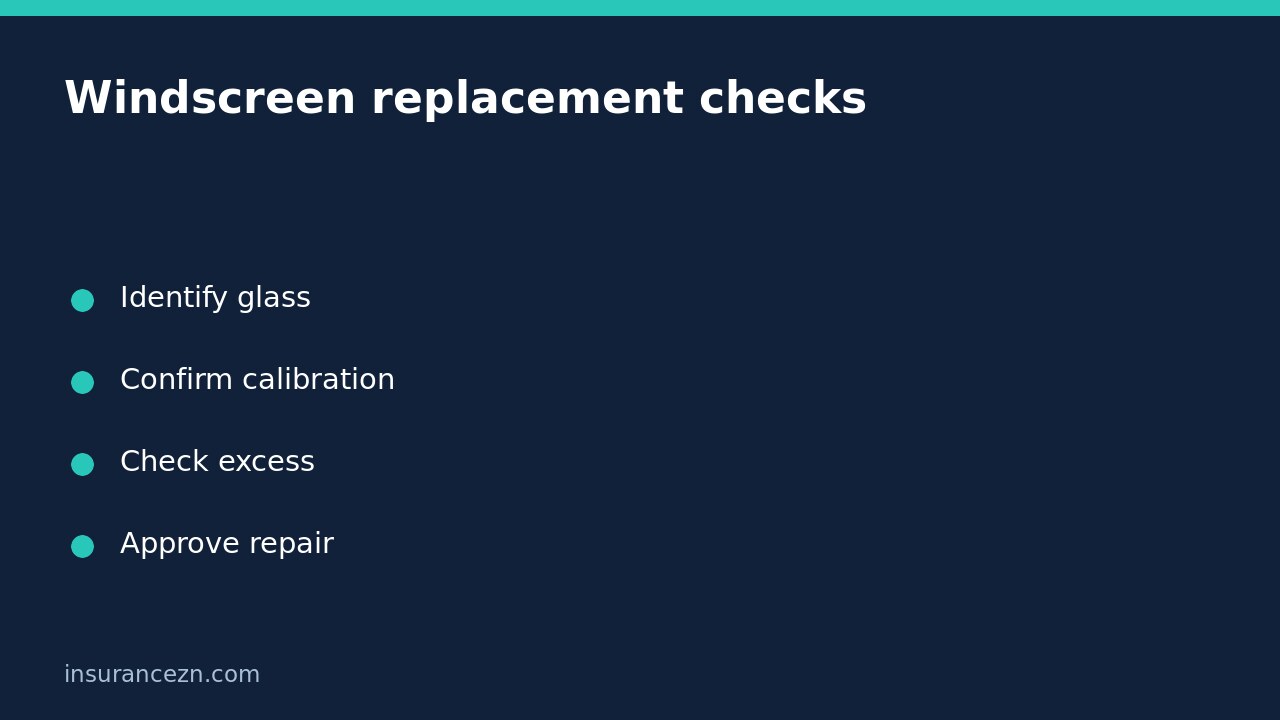

When comparing car insurance for a vehicle with cameras or sensors near the windscreen, ask about the complete replacement process, not simply whether glass is covered. Establish which glass is eligible, whether necessary camera calibration is included in an accepted repair, which excess applies and who authorises the work. A cheap glass option is difficult to assess while those questions remain unanswered.
This is general information for Australian readers, not personal financial advice. Cover depends on the policy, Product Disclosure Statement (PDS), schedule, endorsements and insurer assessment. The provider example below illustrates questions to ask; it is not a recommendation or a rule applying to every insurer.
Identify the actual vehicle and repair task
Give each insurer the same vehicle details, including model variant and any known windscreen-mounted driver-assistance equipment. If uncertain, obtain the relevant specification from the vehicle documentation or ask a qualified repairer to identify the equipment. Do not assume that another trim level has the same glass or sensors.
Separate a small chip repair from replacement of the whole screen. Ask the repairer what work is proposed and whether the vehicle manufacturer specifies checks or calibration for that job. Insurance comparison is not a substitute for a technical safety assessment, and a driver should not attempt to realign cameras as a cost-saving measure.
Use a provider example without generalising it
Budget Direct explains its reduced window-glass excess option and states that its nominated glass partner can repair or replace ADAS windscreens and reset or recalibrate them afterwards. That is useful evidence that the job can involve more than fitting a sheet of glass. It does not establish another insurer’s process or acceptance of a particular repair quote.
The same page distinguishes eligible window panels from other glass components. Its reduced-excess table includes windscreens, side windows and rear windows, but excludes sunroofs, headlight lenses, indicator glass and mirrors. Those exclusions concern that reduced-excess option: they should not be misread as saying the comprehensive policy never covers damage to those components. Ask each competing insurer to make the same distinction in writing.
Build a complete-job comparison sheet
- Glass: Which panel is damaged, and what replacement specification is proposed?
- Associated work: Are necessary sensor checks, calibration, labour and related materials included in the authorised repair?
- Repair pathway: Must the insurer arrange the job, and what happens if you approach a different repairer?
- Excess: What applies to glass-only damage, and what changes if the same event also damages bodywork?
- Option timing: When must optional glass cover be selected, and when does it become effective?
- Records: What repair and calibration documentation will be provided?
Budget Direct describes a limited window for adding its option around buying, renewing or transferring a policy. Check the current applicable terms rather than assuming an optional benefit can be added after damage has occurred. Buying an extra now does not establish retrospective cover for an existing crack.
Compare like-for-like quotes before booking
Consider a fictional driver whose replacement estimate has separate lines for glass installation and camera calibration. One quote mentions a glass excess but says nothing about calibration; another describes an insurer-managed replacement process. The unanswered line is not automatically an exclusion or a free benefit. Send both insurers the same job description and ask what would be included in an accepted glass-only claim.
Record the total premium with the option, the applicable excess and any costs the insurer says remain outside the authorised job. Do not treat the difference between two excess amounts as guaranteed savings: a claim may never occur, the event may not qualify, and broader cover may differ. For related excess questions, see comparing excess rules when fault is disputed.
Final checks and common questions
Does calibration wording guarantee every claim? No. Obtain vehicle-specific confirmation and check the policy’s conditions and authorisation process. A provider’s general description does not determine an individual assessment.
Can I book first and claim later? Ask before committing to costs. Distinguish an acknowledgement, an approved claim and authority for the particular repair. If the screen may be unsafe, seek qualified safety guidance promptly; do not continue driving simply while waiting for an insurance comparison.
Before choosing, save the dated quote, relevant wording, written answers and vehicle details together. A useful comparison ends with an understood repair pathway and costs, not merely a tick beside the word windscreen.