
Car insurance premiums are not a flat rate applied uniformly to every driver; they are dynamic calculations heavily influenced by demographic factors, most notably age. Insurers use actuarial data to assess risk, and unfortunately, statistics often penalize specific age brackets with higher rates. Understanding how your age group impacts your policy costs is the first step toward making informed decisions that lower your monthly bill. By comparing quotes across different age demographics and understanding the underlying reasons for cost variations, drivers can identify strategies to mitigate high premiums without sacrificing necessary coverage.
The relationship between age and car insurance cost is often U-shaped. The youngest drivers face the steepest rates due to a lack of experience combined with statistically higher accident frequencies. As drivers mature into their 30s and 40s, premiums typically drop significantly as they are viewed as the most experienced and safest demographic. However, for drivers over the age of 65 or 70, costs may rise again, not because of recklessness, but due to concerns about slower reaction times and declining vision. To truly save money, you must look beyond a single quote and analyze how these age-related trends interact with other factors like driving history and vehicle type.
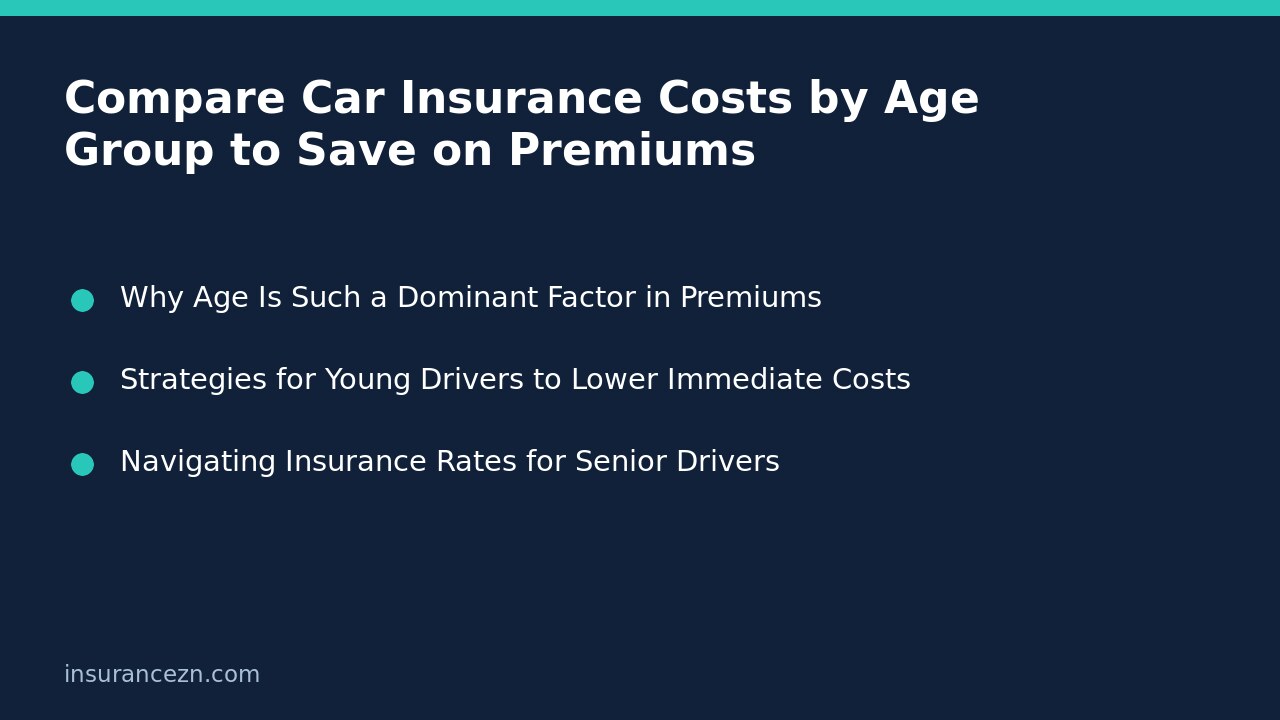
Why Age Is Such a Dominant Factor in Premiums
Insurance companies rely on historical crash data to predict future risk. For young drivers, specifically those under 25, the combination of limited driving experience and biological immaturity creates a high-risk profile. Studies consistently show that teenage drivers are involved in significantly more accidents per mile driven than older adults. Consequently, insurers charge these demographics some of the highest premiums in the market.
Conversely, middle-aged drivers benefit from what is known as “experience discount.” Having accumulated thousands of miles behind the wheel over decades without a major accident record signals to insurers that you are a low-risk candidate. This demographic often enjoys the lowest rates available.
It is important to note that age is rarely the sole determinant. Insurers combine age with credit score, driving record, location, and vehicle make/model. However, age remains one of the few factors that changes automatically over time without any action required on your part. Recognizing this allows you to anticipate when you might become eligible for a rate drop simply by aging out of a high-risk bracket.
Strategies for Young Drivers to Lower Immediate Costs
For drivers in their teens and early twenties, the path to affordable insurance requires proactive measures. The primary way to reduce costs immediately is through parental coverage adjustments. If a young driver lives with parents, they are often added to a parent’s policy. In this scenario, the premium increase is based on the young driver’s age but can be mitigated if the young driver maintains an excellent grade point average (GPA) or participates in accredited defensive driving courses.
Another effective tactic for young adults is shopping around exclusively at their own address once they move out of a parent’s home. While this might seem counterintuitive, being listed on multiple policies can sometimes confuse algorithms or lead to higher aggregate costs. Additionally, young drivers should consider raising their deductibles if they have the financial capacity to do so. A higher deductible lowers the premium because you are agreeing to pay more out-of-pocket in the event of a claim. Finally, choosing a car with high safety ratings and anti-theft devices can offset some of the age-related surcharge.
Navigating Insurance Rates for Senior Drivers
As drivers enter their senior years, specifically after turning 65 or 70, insurance costs may begin to climb again. Insurers do not view this as a reflection of moral character but rather as an adjustment based on accident statistics that show a slight increase in collision frequency among the very elderly. However, this does not mean seniors cannot find affordable coverage.
The key strategy for senior drivers is to shop around aggressively. Many insurers have specific “senior discounts” or preferential rate structures that are not advertised prominently. Some companies specialize in insuring older drivers who may be deemed high-risk by national carriers. It is also crucial for seniors to review their policy annually, as rates can fluctuate based on local laws and medical inflation. Maintaining a clean driving record is even more critical at this stage; a single accident can have a compounding effect on premiums for a longer period than it would for a younger driver.
How Driving History Modifies Age-Based Rates
While age sets the baseline, your driving history acts as the modifier that can either skyrocket or slash your premium. A young driver with a clean record might pay less than an older driver with multiple at-fault accidents and traffic violations. This highlights a critical truth: age is just one variable in a complex equation.
Common mistakes include assuming that because you are over 25, your rates will automatically drop to the lowest tier. This is not always true if your record includes a DUI, a hit-and-run, or multiple speeding tickets within the last three years. Insurers weigh these infractions heavily. Conversely, completing an approved defensive driving course can sometimes result in a discount that rivals the benefits of aging into a lower-risk bracket. Always ask your agent how specific violations impact your age-based rate calculation to get a realistic picture of your standing.
Real-World Example: The Cost Gap Between Age Groups
To illustrate the financial impact, consider two hypothetical drivers living in the same zip code with identical credit scores and vehicle choices (a 2018 sedan). Driver A is 17 years old and has never held a license. Driver B is 45 years old with five years of clean driving history.
In this scenario, Driver A’s monthly premium might exceed $250 due to the “new driver” surcharge and lack of experience data. Driver B, benefiting from the “golden age” of insurability, might pay around $90 per month. That is a difference of over $160 annually for the same coverage limits. If both drivers wait until they are 45 to purchase insurance (assuming Driver A can legally drive), Driver A could save thousands of dollars compared to buying at age 17. This example underscores why waiting until you reach your late 20s is often the most financially prudent decision before purchasing a first car, provided that transportation needs allow for it.
Checklist for Comparing Quotes by Age Group
When comparing quotes, ensure you are doing so fairly across different insurers. Use this checklist to optimize your search:
- Verify Eligibility: Confirm each insurer’s specific age brackets. Some companies offer discounts starting at 25, while others wait until 30.
- Check for Bundling: Ask if bundling auto with home or renters insurance provides a discount that offsets age-related costs.
- Review Discount Programs: Look for “good student” discounts for young drivers and “senior citizen” discounts for older drivers.
- Adjust Deductibles: Calculate the break-even point where a higher deductible saves enough on premiums to cover the potential out-of-pocket expense if an accident occurs.
- Monitor Mileage: If you drive less than 10,000 miles a year, ask about “low-mileage” discounts, which can be particularly beneficial for retirees or remote workers.
Conclusion
Comparing car insurance costs by age group is essential for any driver looking to manage their budget effectively. While age is a significant factor in determining premiums, it is not the only one. By understanding the actuarial logic behind rate increases for young and senior drivers, taking steps like maintaining a clean record, completing defensive driving courses, and shopping around strategically, you can significantly reduce your insurance expenses. Whether you are just turning 18 or approaching retirement, being proactive about how your demographics influence your policy ensures you are getting fair value for your coverage. Always remember to compare multiple quotes and read the fine print regarding age-related clauses before signing up for a new policy.