
Having an expensive item listed on a home contents policy does not, by itself, establish that it is insured when you take it out. An increased at-home item limit and portable valuables cover can serve different purposes. Before paying for an amendment, ask which location, loss events and optional section the insurer is actually accepting.
This is general information for Australian readers, not personal financial advice. Cover depends on the relevant policy, Product Disclosure Statement (PDS), certificate, limits, exclusions and circumstances. The AAMI examples below explain that provider’s published options, not a rule shared by every Australian insurer or a recommendation to buy its products.
Separate a higher limit from a wider location
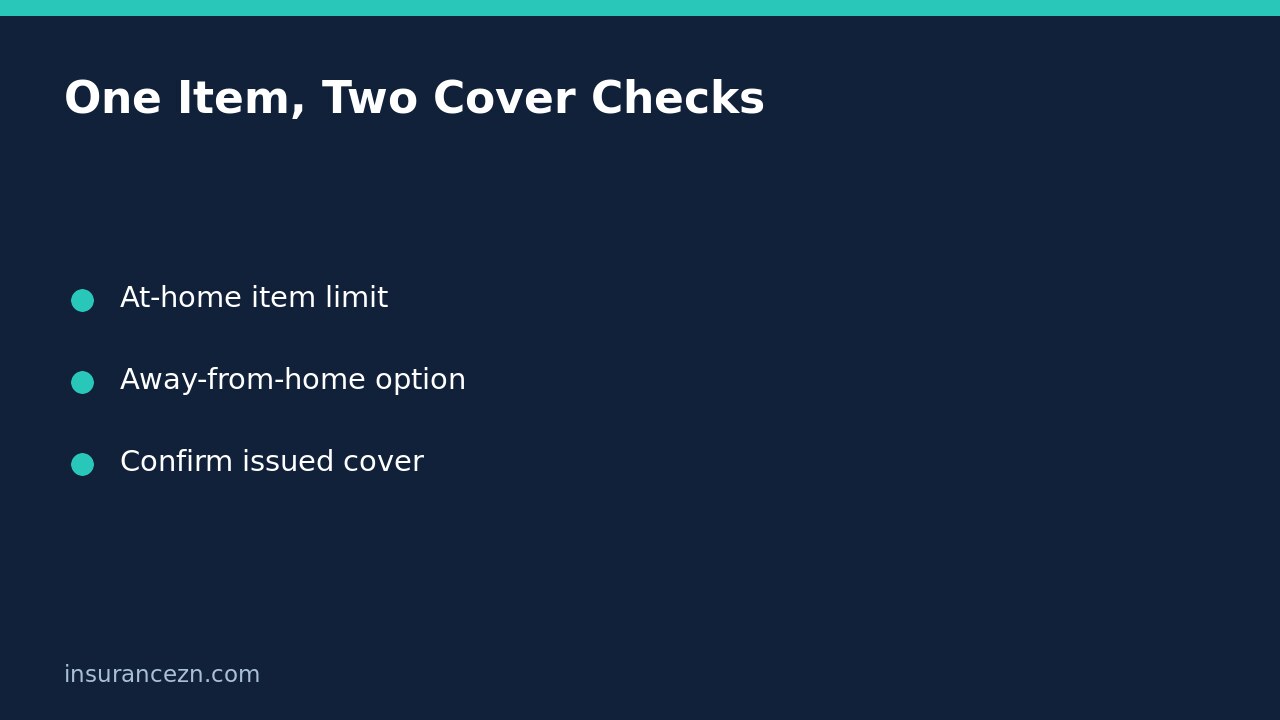
A higher limit answers a question about the amount potentially available under applicable cover. It does not necessarily change where the item is insured or which events are included. Likewise, an option described as portable should not be assumed to remove all item limits or security conditions.
AAMI’s Contents with Flexible Limits summary describes specified items at the insured address, available for an extra premium. It says certain items can have their standard limit increased, with the selected items shown on the Certificate of Insurance. The explanation refers to damage by an insured event at home. Those words should not be replaced with a broader promise of protection wherever the owner goes.
Its Extra Cover Portable Valuables summary describes a separate optional cover for accidental loss or damage to qualifying valuable personal belongings. It distinguishes specified and unspecified arrangements and explains geographical and other conditions. These are separate checks even when the same object is being discussed.
Compare two scenarios for the same possession
Imagine a fictional owner with a valuable watch. They want to understand a fire at the insured home and accidental loss while wearing it on a local outing. They should describe both scenarios to the insurer instead of asking only, ‘Is my watch listed?’
For the fire scenario, ask whether the watch is eligible contents, which insured event applies, and whether a selected at-home limit is recorded. For the outing, ask whether the portable option has been accepted, whether the watch needs individual specification, and what loss, location and security conditions apply. Neither answer should be inferred from the other.
This is a comparison exercise, not a claim prediction. The item’s description, ownership, evidence, relevant excess and the circumstances of an actual loss would still matter. An agreed value or listed amount should not be treated as an unconditional payment promise.
Use a side-by-side confirmation worksheet
Send the insurer a short description of the item and the places you intend to use it. Ask for answers against the actual policy wording, not just a general marketing description.
- Item: What exact description and identifying details are recorded?
- At home: Which insured events apply, and what item or category limit applies?
- Outside: Is an optional portable section required and accepted?
- Amount: Is the limit per item, pair, set, collection or incident, and is there a separate total?
- Conditions: Which geographical, storage, unattended-item or use restrictions apply?
- Cost: What additional premium and excess apply to each option?
AAMI’s contents overview expressly distinguishes items away from home from the portable option, while noting specific circumstances under contents temporarily removed cover. Do not turn that exception into a general promise that ordinary outings are included. Ask which exact clause applies to the situation you describe.
Check the processed amendment, not just the request
A conversation, uploaded valuation or automated acknowledgement does not establish that the correct option has been added. After requesting a change, obtain the insurer’s confirmation of acceptance, commencement date and any outstanding requirements. Review the updated certificate and associated documents for the item description, section name, selected amount and premium.
If only the at-home listing appears, ask whether portable cover was separately requested and processed. If a spelling or item-identification error appears, correct it with supporting evidence rather than assuming the insurer will infer what was intended. Keep the old documents as well as the updated version so the effective period remains clear.
If you share accommodation, also review whose possessions qualify under share-house contents insurance. Correctly describing a valuable does not resolve whose property the policy is eligible to cover.
Quick questions before relying on cover
Does a receipt or valuation add the item automatically? No. It may support the request or evidence the item, but ask whether the amendment was accepted and recorded.
Is portable cover worldwide without qualifications? Do not assume so. AAMI’s summary distinguishes Australia and New Zealand cover from a conditional overseas provision for jewellery and watches. Read the applicable policy before travel rather than extending a domestic description to every destination.
Can I add the option after losing the item? Do not describe a new amendment as retrospective protection. Report the true circumstances and ask about assessment under the cover that actually applied at the time. Future changes and an existing loss are separate matters.