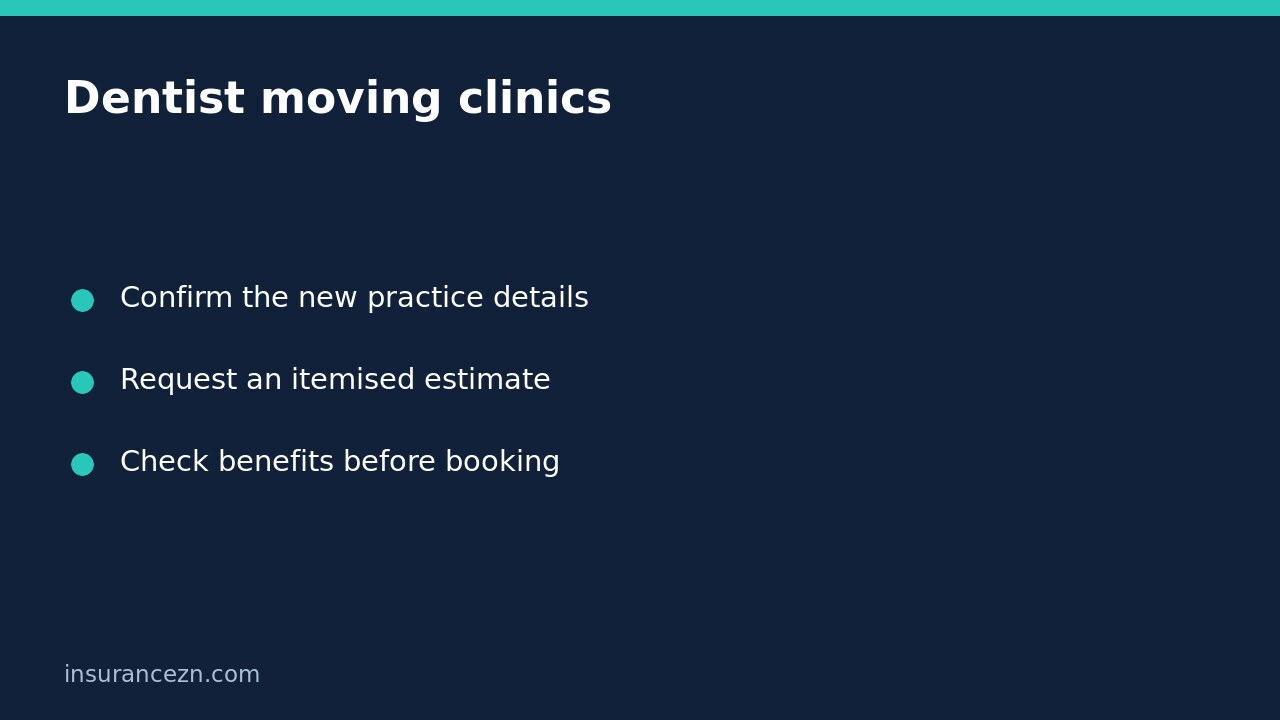

If your dentist moves to another practice, do not assume that your previous extras rebate or no-gap arrangement follows them automatically. Ask the new clinic for its treatment and billing details, then obtain a fresh personal benefit estimate from your health insurer. The same dentist, a different practice and an unchanged treatment plan are still separate facts to check.
This is general information for Australian readers, not personal financial advice. Benefits depend on your policy, fund rules and applicable policy documents or PDS. A clinic’s invitation to follow a dentist is not insurer confirmation of benefits, and an estimate is not a final claim assessment.
Identify what changed and what stayed the same
Start with a short record of the move. Confirm the dentist’s name, the new practice name and address, the appointment date and the details the clinic will put on your invoice. Ask which practitioner identifier and billing details the insurer needs for an accurate enquiry. Do not invent or copy identifiers from an old receipt if the clinic says different details apply.
Next, distinguish a change of practice from a change of treatment. If you are continuing an existing plan, ask whether the proposed services, item numbers and fees remain the same. A new practice may give you a different quote even when the clinical task sounds familiar. Keep the earlier plan rather than silently replacing it, so the reason for any difference remains visible.
Ask the insurer about this dentist at this location
PrivateHealth.gov.au explains that general treatment cover can include dental services, but cover depends on the policy and nearly all extras services have limits. Its overview does not establish a universal preferred-provider rule or promise that a practitioner is eligible at every location.
Therefore, frame your enquiry around the actual appointment. Ask the fund to confirm whether the named practitioner and proposed service are eligible under your product at the new practice. If you previously used a preferred-provider or no-gap arrangement, ask separately whether that arrangement applies to the proposed appointment and which conditions remain to be met. Recognition for claiming and eligibility for a particular advertised arrangement should not be treated as interchangeable without confirmation.
- Which patient and product does the estimate relate to?
- Which practitioner, practice and appointment date were checked?
- Are the quoted item numbers included, and what benefit is estimated for each?
- Do waiting periods, remaining limits or other conditions affect the result?
- What information could change the assessment when the final claim arrives?
Get a fresh written quote, not just a promise of the same gap
Ask the new clinic to itemise the services and fees before agreeing to non-urgent treatment. If reception says your gap will be unchanged, ask what insurer estimate that statement relies on. An old benefit receipt shows the result of an earlier claim; it does not establish the benefit for a new service date.
Keep the clinic quote and fund response together. Mark any unconfirmed item as unresolved rather than treating the full fee as an eligible claim. If the treatment plan itself has changed, see the related guide on refreshing an extras estimate after a revised dental plan. Here, the immediate task is different: checking the practitioner and practice context even if the treatment is unchanged.
Use a side-by-side appointment record
Build a small worksheet with one column for the old practice and one for the new practice. Record the patient, dentist, location, proposed services, itemised fee, estimated benefit and expected personal payment. Use your actual quote and insurer response; do not fill the benefit column from an advertised annual maximum.
Add the enquiry reference, date and any conditions beside the new estimate. If a benefit cannot yet be confirmed, ask what missing details are required and who will provide them. This is more useful than asking only whether the clinic accepts your health fund card: a payment terminal or successful electronic submission does not establish the amount your policy will pay.
Reconcile the completed visit separately
After treatment, compare the final invoice with the proposed services and the fund’s claim assessment. A different procedure, fee or service date may require explanation. Ask the clinic to clarify factual invoice discrepancies and the insurer to explain the assessed benefit under the applicable rules. Preserve the original documents and any corrected versions.
Does following the dentist require switching funds? Not necessarily. Establish the actual benefit and personal cost first rather than making a policy change from an assumption about the move.
Can the new clinic guarantee my insurer’s payment? Treat clinic statements and insurer assessments separately. Ask for the assumptions behind any estimate and confirm your own policy conditions. Do not delay urgent clinical care while resolving insurance administration; discuss treatment needs with your clinician.
Source: PrivateHealth.gov.au explains general treatment cover and service, annual and lifetime limitations. Product-specific practitioner arrangements must be checked directly with your insurer.