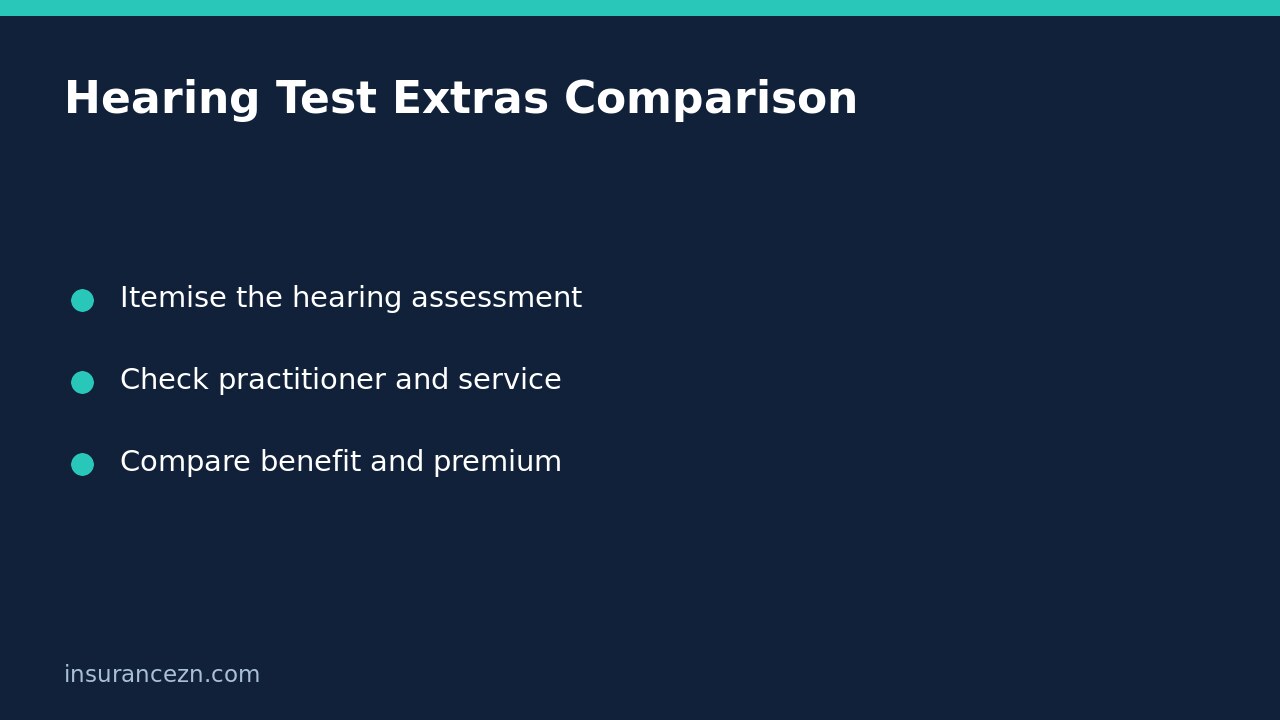

If you are comparing extras insurance before a hearing test, ask about the actual assessment appointment, not simply whether the policy includes hearing aids. An allowance for buying a device does not establish a benefit for testing, a written report or a later adjustment appointment. Obtain the clinic’s itemised quote and ask each shortlisted fund to assess the same services.
This is general information for Australian readers, not personal financial advice. Benefits depend on the product rules, eligibility, waiting periods and applicable policy documents, including any relevant PDS. No example below establishes an entitlement or replaces clinical advice.
Separate the appointment from a possible device purchase
A hearing-related booking can lead to several different charges. Start by asking the clinic what you are actually buying: an initial consultation, specified hearing tests, a report, a device-fitting visit or another service. Do not assume that a free screening and a comprehensive paid assessment are interchangeable.
The government’s overview of private health insurance explains that extras benefits depend on the selected policy and can have per-service, annual and lifetime limits. It lists hearing aids as an example of an appliance that may be included. That broad overview does not say that every audiology appointment is covered, nor establish any particular fund’s assessment benefit.
If the clinic says a government-funded or Medicare pathway may apply, ask it to identify the specific service, eligibility requirements and patient charge. Keep that answer separate from the extras estimate. Do not assume that the same invoice can receive overlapping benefits from different payment pathways.
Ask the clinic for a quote the fund can assess
Before requesting insurance comparisons, collect enough detail to avoid a vague answer about hearing care generally:
- The patient’s name and the intended appointment date.
- The practitioner’s name, practice location and relevant provider details.
- The exact service description and any billing or item codes used.
- The fee for each assessment, report or follow-up, rather than only a package total.
- Whether a device purchase is optional and priced separately.
- Any cancellation charge or deposit, and the clinic’s written terms.
A clinic’s ability to send claims electronically does not prove that your chosen product pays for each item. Likewise, recognition of the practitioner does not establish eligibility for every service that practitioner offers. Ask about both the provider and the exact charge.
Send the same questions to each shortlisted insurer
Give each fund the itemised quote and ask for a written estimate under the exact product you are considering. Ask which service category applies, whether the provider and appointment are eligible, and whether a referral or other documentation is required. If the fund cannot identify an item, resolve that uncertainty before treating the benefit as available.
Then ask about waiting periods, service frequency restrictions, available balances and any combined limits. Confirm whether an assessment payment would reduce a pool also used for devices or other services. Do not subtract it from a hearing-aid allowance unless the fund confirms that is how the product works.
Request an estimate for your proposed service date, particularly if you are joining or changing products. A quote produced today is not evidence that benefits begin today. Retain the response and its assumptions; the final claim still depends on the service actually performed and the policy rules.
Compare personal costs over the same period
Make a small worksheet with one row per quoted service and separate columns for the clinic’s fee, each fund’s estimated benefit and your remaining charge. Put the premium for the same comparison period below those rows. Record unknown benefits as unknown, not as the advertised maximum.
For example, if the clinic bundles testing and a report, ask whether the fund’s estimate applies to the whole package or only one component. If a follow-up becomes necessary, request its own estimate rather than reusing the first-visit answer. This is a checking example, not a statement about any particular product’s billing rules.
Compare the additional premium with benefits you realistically expect to use, without buying unnecessary care to exhaust a limit. If you also need another kind of treatment, our guide to comparing extras using an itemised dental quote applies the same service-by-service budgeting approach.
Quick questions before you book
Does a hearing-aid benefit mean my hearing test is covered? Not by itself. Obtain a service-specific answer for the assessment.
Is an insurer estimate a guarantee? No. Preserve the quote and assumptions, then compare them with the final invoice and processed assessment.
Should I postpone clinically necessary care while comparing? Seek clinical guidance about timing. Insurance administration should not replace assessment of your health needs.
Before paying, keep the clinic quote, product name, proposed start date, waiting-period answer and fund estimate together. This turns a broad hearing-care advertisement into a comparison of the appointment you actually intend to attend.