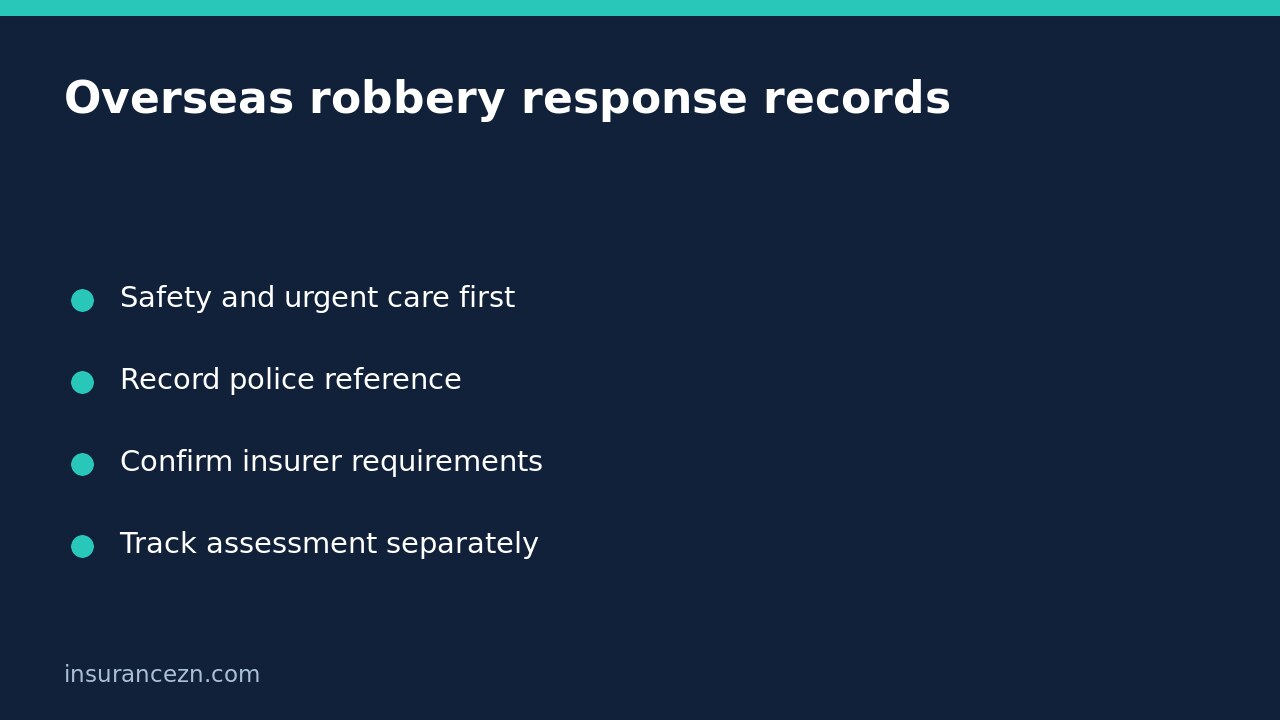

If you are robbed overseas, get to safety and obtain urgent medical help before organising an insurance file. Then report the incident to local police and contact your travel insurer through a verified channel. A police report records the incident; it does not establish that your insurance covers every stolen item, replacement purchase or changed travel booking.
This is general information for Australian readers, not personal financial advice. Read the applicable PDS, policy wording, certificate and endorsements. Benefits depend on your policy’s conditions, exclusions, limits and assessment; this checklist does not promise reimbursement.
Put safety and health ahead of paperwork
Smartraveller’s theft and robbery guidance puts personal safety first and advises against chasing a robber. If you are injured, seek medical care. Use local emergency services where needed, and do not delay treatment while looking for receipts or waiting for an insurance response.
Once safe, contact your bank about stolen payment cards and take appropriate steps to protect compromised accounts. For stolen passports, follow official Australian passport and consular instructions. Keep insurance administration separate from document replacement: asking your insurer about passport costs does not report the stolen passport to the responsible authority.
Create a factual incident record
Write down what you remember as soon as it is practical: the location, approximate local time, what happened and which belongings were taken. Distinguish what you saw from what you later discovered. If you do not know exactly when a particular item disappeared, say so rather than inventing a precise account.
- List each missing item with its description and identifying details, where available.
- Preserve relevant photographs, purchase records and booking details.
- Record witness contact details only where safe and appropriate.
- Keep copies of communications with police, banks and transport or accommodation providers.
- Note uncertainties explicitly rather than silently changing the story between reports.
Avoid accusing a particular person without evidence. Smartraveller cautions against unsupported accusations. A hotel enquiry, lost-property request or suspected theft account should accurately describe what is known, not turn an assumption into a confirmed allegation.
Keep the police reference and insurer reference separate
Report the crime to local police and obtain the available report or reference. Smartraveller highlights the importance of a police report for insurance. Ask your insurer exactly which document it requires, how to supply it and what to do if local police cannot immediately provide a copy. Do not invent a universal reporting deadline or assume an unavailable report will automatically be waived.
When contacting the insurer, establish whether you are making an enquiry, opening an assistance case or actually lodging a claim. Record the reference and ask what remains outstanding. An upload confirmation proves a submission was received through that channel; it does not establish that an assessor has reviewed the evidence or accepted liability.
For example, a traveller might have a police reference, a bank card cancellation confirmation and an insurer assistance number after the same robbery. Those records serve different purposes. The traveller still needs to confirm the claim’s lodgement status and provide the insurer’s requested item evidence.
Check proposed expenses before treating them as reimbursable
Ask separately about replacement essentials, damaged property, medical costs and any proposed itinerary change. These may involve different benefits and conditions. Where practicable, get the insurer’s instructions before incurring non-urgent expenses, while never delaying necessary emergency care.
Smartraveller explains that baggage cover varies both in total and per item. Stolen cash, documents and valuables may receive different treatment. The purchase price of a replacement is not automatically the assessed insured value, and proof of ownership does not eliminate exclusions or the excess. Keep itemised receipts without assuming that keeping a receipt guarantees payment.
The broader government travel insurance overview recommends reading the PDS for inclusions, exclusions and claims procedures. Use the wording applicable to your policy, not another traveller’s settlement story.
Understand what consular help can and cannot do
Australian consular services may assist with matters such as replacing a stolen passport, within their stated limits. Smartraveller says the government cannot investigate the theft, provide money to replace stolen belongings or help with your travel insurance claim. Contacting an embassy therefore does not transfer your claim administration or expenses to the government.
For preparation that can make insurer contact easier when a phone is missing, see building an offline travel insurance emergency card. Assistance access remains different from approval of costs.
Final check before assuming the file is complete
Confirm that the insurer has the correct incident and police references, the current item list and any outstanding evidence. Ask what happens next and how you will receive the assessment. If a detail needs correction, identify the original entry and supported replacement, retain both versions and ask for confirmation it was processed. Do not lodge a duplicate claim merely because an attachment or update is still awaiting review.