
Adding an optional hire car benefit after a crash should not be treated as a way to insure the transport costs of that earlier crash. First check what your policy already provided at the time of the incident. Then consider any change for future incidents as a separate transaction, with its own accepted effective date.
This is a records-and-amendment task, not simply a comparison of which insurer offers more hire days. Keeping the two timelines separate helps avoid booking a rental on an assumption that an updated policy document has changed an earlier claim.
Read the insurer’s timing rule before requesting an option
AAMI’s comprehensive car insurance overview says optional covers can be added while obtaining a quote, midway through a policy term or at renewal. Its disclaimer also states that optional covers cannot be added after an incident to cover loss or damage from that same incident: the option must have been added before the incident being claimed for.
That is a provider-specific statement, not a universal promise about every insurer’s amendment process. Check your own PDS, policy schedule and any endorsement. The ability to select an option online does not establish retrospective protection, and payment for an amendment does not establish entitlement for a prior accident.
Create an incident timeline and an amendment timeline
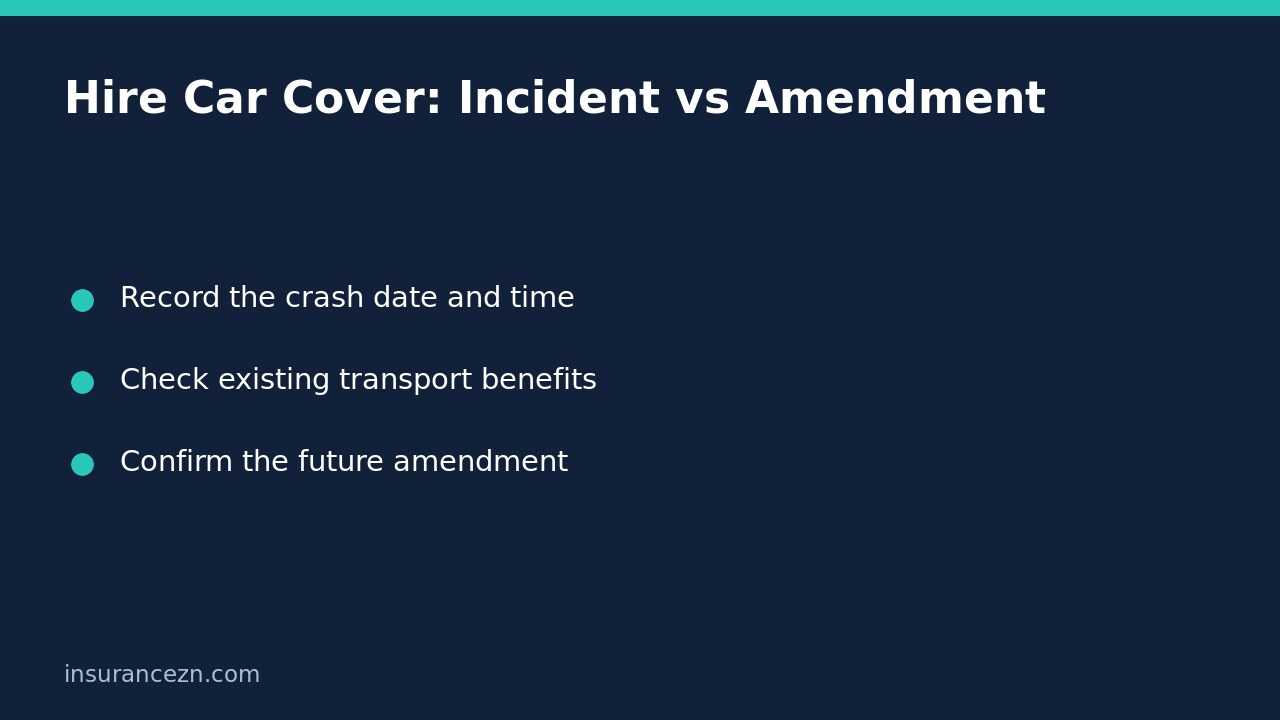
On the incident side, record the actual crash date and time, the existing policy number, the version of the schedule that applied then, and the claim reference if one already exists. Preserve the original documents rather than replacing them with the newest download.
On the amendment side, record when you requested the option, the insurer’s response, any extra premium, and the confirmed effective date and time. Mark a submitted request as pending until acceptance is confirmed. If an updated certificate arrives, check that it shows the selection you intended.
For example, imagine a driver crashes on Monday and asks on Tuesday to add hire car after an incident cover. The Tuesday request belongs to the future-cover review. It is not evidence that Monday’s accident now meets that optional benefit. The Monday claim still needs assessment against the terms that applied to it.
Check existing benefits without assuming the answer is no
The absence of one optional benefit does not establish that every form of replacement transport is unavailable. AAMI’s overview separately describes a hire car for qualifying not-at-fault incidents and an optional Hire car after an incident benefit. The included benefit has conditions, including details of the at-fault driver and vehicle. Read the actual terms rather than inferring eligibility from your view of fault.
Ask the claims team: which existing benefit, if any, could apply to this incident; what evidence is required; and what booking arrangements must be followed? A lodged claim is not an accepted hire entitlement, and an accepted claim is not necessarily permission to arrange any rental at any price.
Keep the insurer’s answer with the existing claim reference. Do not lodge a second accident claim just because you have changed an optional cover selection. If an answer seems inconsistent with the original schedule, ask for the relevant wording and a written explanation.
Resolve booking costs before relying on reimbursement
If you need transport before the insurer has confirmed arrangements, ask who will pay and which costs remain yours. Clarify the permitted vehicle category, approved start and end dates, booking method, deposit requirements and responsibility for rental extras. Do not describe reimbursement as guaranteed while those questions remain unresolved.
Where you choose to book privately without confirmed funding, budget on the basis that the cost may remain your responsibility. A rental agreement can create obligations separate from the motor claim. Never tell the rental company that an insurer has approved payment unless that is actually confirmed.
Verify the new option for later incidents
Before relying on an amendment, reconcile the accepted benefit name, extra payable premium, effective timestamp and issued policy documents. Ask how any conditions or restrictions apply. Keep the confirmation rather than just a screenshot of an unsubmitted selection.
The same timing distinction matters for other optional benefits. Our guide to adding windscreen cover after existing damage explains the separate old-damage and future-cover questions; its glass discussion does not establish hire car entitlement.
Does the new schedule prove the earlier rental is covered? Not by itself. Match the incident to the applicable policy version and obtain the claims team’s decision about that specific transport expense.
This is general information for Australian readers, not personal financial advice. Eligibility depends on the policy/PDS, schedule, effective dates, exclusions, limits and insurer assessment. An amendment request, premium payment or rental booking does not guarantee claim approval.