
In an era where ransomware attacks, phishing schemes, and third-party data leaks occur with alarming frequency, cyber insurance has evolved from a niche add-on to a fundamental component of corporate risk management. For business owners and IT directors, understanding the nuances of cyber liability coverage is no longer optional; it is a strategic necessity. This article demystifies what cyber insurance covers, how policies function in the event of a breach, and the critical steps your organization must take before an incident occurs to ensure claims are valid.
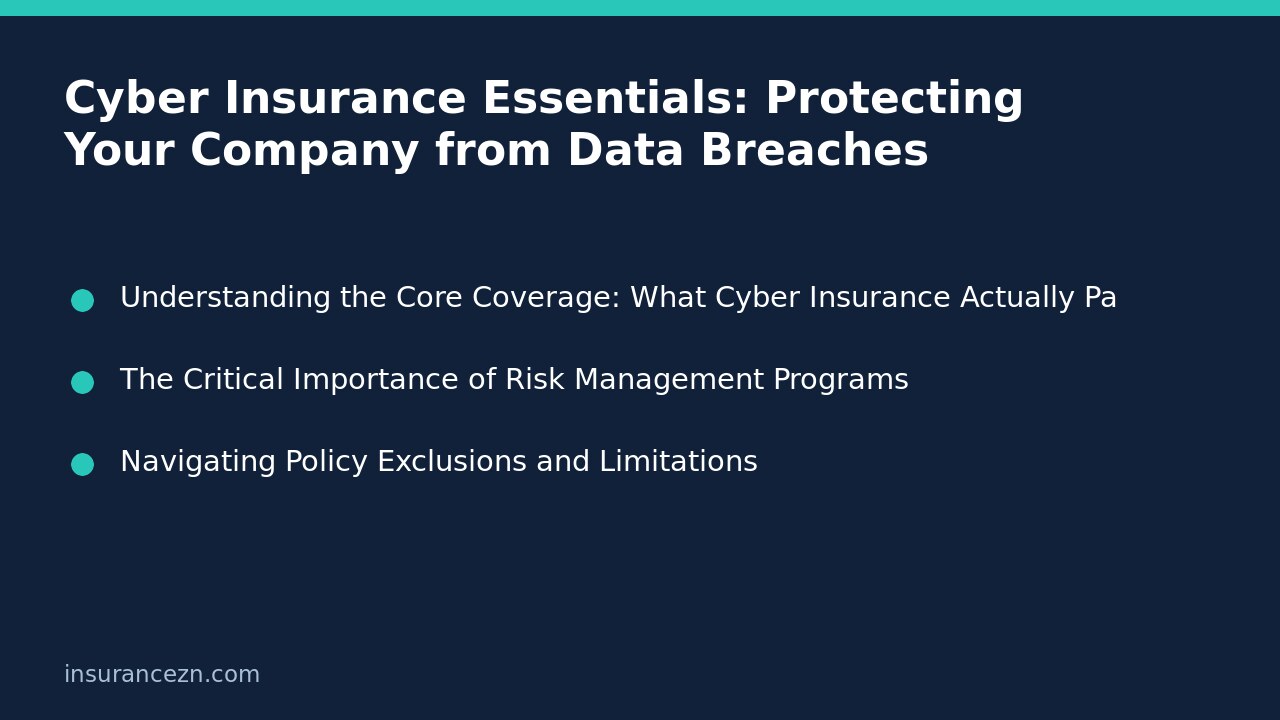
Understanding the Core Coverage: What Cyber Insurance Actually Pays For
Cyber insurance policies are generally divided into two primary categories: First-Party coverage and Third-Party coverage. It is vital to distinguish between them, as they address different financial losses.
First-Party Coverage focuses on costs your business incurs directly from a cyber incident. This typically includes:
* Data Breach Response Costs: Expenses related to forensic investigations, legal advice, credit monitoring services for affected individuals, and public relations campaigns to manage reputation damage.
* Business Interruption Losses: Compensation for lost income and extra operating expenses (such as renting a temporary location or using cloud servers) while your systems are down due to an attack.
* Ransomware Payments: Many modern policies include coverage for ransomware negotiation costs and the actual payment of ransoms, though this is often subject to strict pre-authorization clauses and government reporting requirements.
Third-Party Coverage protects you against claims made by others. If a customer sues your company because their personal data was stolen, third-party coverage handles:
* Legal Defense Costs: Attorney fees and court costs associated with defending against lawsuits or regulatory investigations.
* Settlements and Judgments: Payments required to settle class-action lawsuits or pay fines levied by regulators (where legally permissible).
The Critical Importance of Risk Management Programs
One of the most significant hurdles in obtaining cyber insurance is the requirement for a robust risk management program. Insurers are increasingly adopting “insurtech” solutions that monitor your company’s security posture before issuing a policy.
Before you can purchase coverage, many carriers will require proof of:
* Multi-Factor Authentication (MFA) enabled on all user accounts.
* Regular patching of software and operating systems.
* Employee training records proving staff have completed cybersecurity awareness modules within the last 12 months.
* Evidence of a tested incident response plan.
If your organization lacks these controls, you may be denied coverage entirely or face prohibitively high premiums. Insurers view poor security hygiene as an unacceptable risk. Therefore, viewing cyber insurance not just as a financial product but as a catalyst for improving your overall security posture is the correct strategic approach.
Navigating Policy Exclusions and Limitations
Not every cyber threat is covered under every policy. Understanding exclusions is just as important as understanding inclusions. Common exclusions include:
* Prior Known Vulnerabilities: If you knew about a security flaw and did not fix it, the resulting breach may be excluded.
* Intellectual Property Theft: Most standard policies do not cover losses related to the theft of trade secrets or proprietary code unless specifically endorsed.
* Cryptojacking: While some newer policies are beginning to address this, many still exclude losses caused by unauthorized use of your computing resources for cryptocurrency mining.
* Regulatory Fines: In many jurisdictions, insurance cannot cover civil fines imposed by government agencies (such as the FTC or GDPR authorities), though defense costs for the investigation might be covered.
Always read the specific “Conditions” and “Exclusions” sections of the policy declaration page. A common mistake is assuming that because a carrier offers cyber insurance, they cover all aspects of a data breach. The fine print often dictates what triggers a claim and what does not.
Real-World Scenario: The Impact of a Breach on a Retail Chain
Consider “FreshMarket,” a mid-sized grocery chain with 50 locations. They suffered a phishing attack that compromised the credentials of a regional manager, allowing attackers to encrypt the point-of-sale (POS) systems across three states.
Without Cyber Insurance:
* FreshMarket pays $250,000 for forensic investigators.
* They pay $1.2 million in settlement costs to affected customers and legal fees.
* They cover 6 months of lost revenue while POS systems are replaced ($400,000).
* They bear the full cost of a negative PR campaign.
* Total Financial Hit: Approximately $1.85 million plus operational disruption.
With Cyber Insurance:
* The insurer covers 90% of the forensic and notification costs.
* The policy pays for the business interruption loss, keeping cash flow stable during the outage.
* Legal defense fees are capped at a lower amount but still significantly reduce out-of-pocket expenses.
* Result: FreshMarket recovers faster, maintaining customer trust and avoiding bankruptcy.
This example illustrates that cyber insurance does not prevent the attack; it provides the financial oxygen needed to survive the aftermath while your team focuses on remediation.
Essential Checklist for Policyholders
To ensure you are fully protected when a breach occurs, maintain an up-to-date checklist:
1. Verify Notification Procedures: Know exactly how and within what timeframe you must report an incident to your insurer (usually 72 hours). Failure to notify promptly can void the policy.
2. Review Sub-Limits: Check if there are sub-limits on specific items like ransomware payments or social engineering attacks.
3. Confirm Data Coverage: Ensure the policy covers the types of data you hold (PII, PHI, financial records) and not just generic “data.”
4. Check for Deductibles: Understand your deductible structure; some policies use a percentage of revenue, while others use a fixed dollar amount or a per-incident cap.
5. Maintain Documentation: Keep all training logs, vulnerability scan reports, and incident response plans organized and ready for audit.
Conclusion: Cyber Insurance as a Layer of Defense
Cyber insurance is not a silver bullet that stops hackers from entering your network. Instead, it acts as a critical layer of defense, bridging the gap between technical security measures and financial resilience. By combining strong cybersecurity hygiene with a comprehensive insurance policy, businesses can navigate the complex landscape of digital threats with confidence. Remember to consult with an experienced broker who understands both the insurance market and the specific risks facing your industry to secure a policy that truly fits your needs.