
A chiropractic benefit on an extras policy does not establish that every charge associated with your first visit is payable. Before booking a non-urgent appointment, ask the clinic to separate the consultation from any proposed imaging, appliances or other services. Then ask your health fund about those exact items rather than requesting a benefit for a vaguely described first-visit package.
This is general information for Australian readers, not personal financial advice. Benefits depend on your policy, fund rules and applicable policy/PDS documents. This article does not recommend chiropractic treatment or determine whether imaging is clinically appropriate; discuss clinical decisions with a suitably qualified treating practitioner.
Why one appointment can require more than one funding check
PrivateHealth.gov.au describes chiropractic treatment as a service that general treatment insurance may cover. It also explains that extras benefits are limited and not all services are included. Those statements support checking a particular policy, not assuming that any invoice from a chiropractic clinic qualifies in full.
The same government overview distinguishes medical services from general treatment services. A separate imaging account should therefore be checked on its own facts. Do not assume it will be paid under chiropractic extras, or that a recommendation from the clinic guarantees a Medicare benefit. Ask the imaging provider which service and referral requirements apply and seek confirmation through the appropriate funding channel.
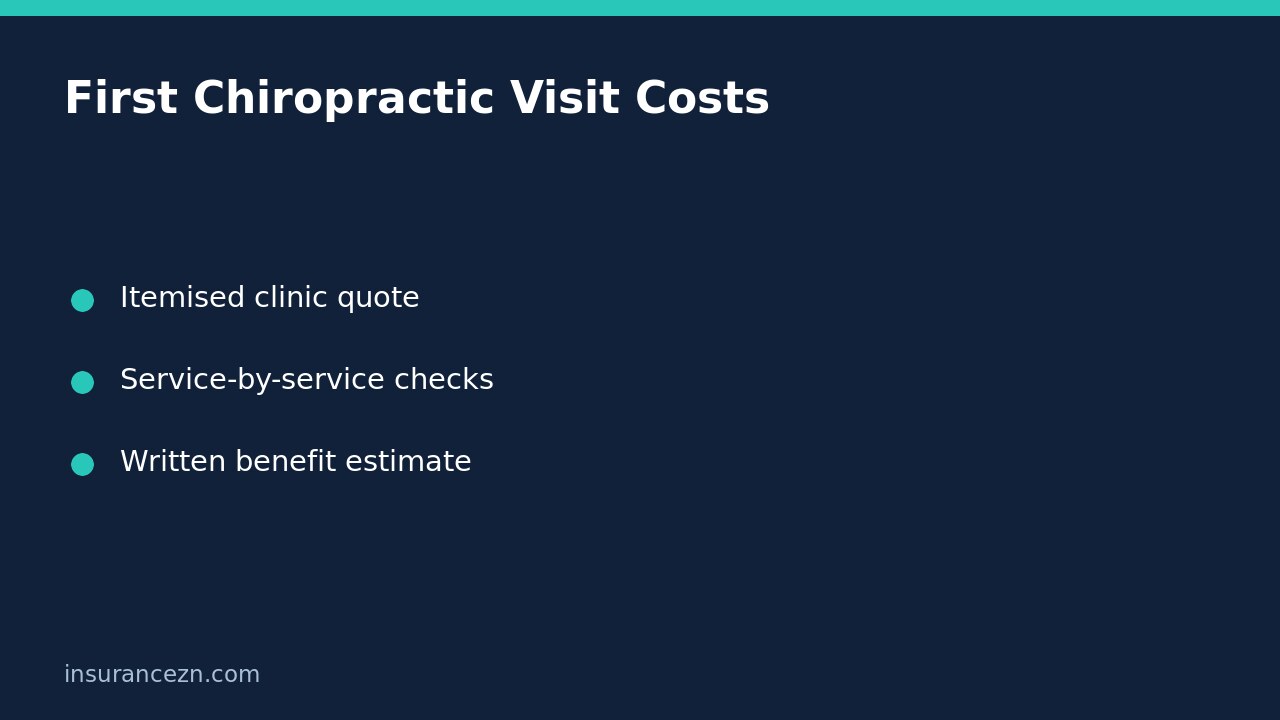
Get a genuinely itemised first-visit quote
Ask what the quoted appointment price includes and what could be charged separately. You are seeking a clear cost estimate, not requesting unnecessary services merely to use insurance. If additional work is proposed after examination, request its price before consenting where circumstances permit.
- Identify the initial consultation charge and the price of any later standard visit.
- List separately any proposed imaging, reports, appliances or other billed services.
- Obtain each provider’s details and the service descriptions or item identifiers they can supply.
- Ask whether a quoted package contains prepaid future visits, and obtain cancellation and refund terms separately.
- Confirm whether you will receive one account or separate invoices from different providers.
Do not combine these lines into one assumed insurance benefit. A clinic’s ability to issue an invoice or process a claim is not confirmation that your membership pays every component.
Ask the fund about the consultation you will actually receive
Give the fund the proposed service description, provider information and intended appointment date. Ask whether your current product includes that treatment, whether the provider is recognised for it and whether any waiting period remains. Check the estimated benefit for an initial consultation rather than substituting a routine follow-up amount.
Next ask which annual, shared or other limits apply and how much remains available to you. PrivateHealth.gov.au warns that general treatment limits can apply per service, per year or over a lifetime. It does not establish the specific combination on your policy. Request a written estimate with its assumptions and remember that the final assessment depends on the actual service and claim.
Build a small cost worksheet without inventing rebates
Create one row for each quoted charge. Record the clinic price, the responsible provider, the fund or Medicare enquiry reference, the estimated benefit and the amount you would need to pay yourself. Mark any unanswered benefit as unconfirmed, not as zero and not as fully covered.
For example, if the consultation estimate is confirmed but an imaging charge is unresolved, your appointment budget is still incomplete. Ask the imaging provider and relevant funding body to resolve that row. Do not multiply the consultation benefit across imaging or appliances just because they relate to the same complaint.
For a similar lesson about distinguishing services before checking benefits, read the physiotherapy versus exercise physiology category checklist. The principle is accurate identification, not that different professions share the same benefit rules.
Questions before paying and after claiming
Does a referral prove cover? No. Clinical referral, provider recognition and financial eligibility are different questions. Confirm the particular funding requirements rather than inferring payment from a referral alone.
Is a successful terminal transaction the final explanation? Keep the itemised invoice and claim statement. Compare the performed services, benefits and remaining limits. If something looks wrong, ask for an explanation under the original claim reference before attempting another submission.
Should I postpone urgent assessment for an insurance answer? Do not delay necessary urgent medical care for benefit administration. For planned care, obtain financial information early enough to consider the costs and options calmly.