
If you discover an old life insurance letter, start by separating two questions: is there money to investigate, and is there insurance currently in force? An unclaimed-money search may help with the first question. It does not, by itself, establish the second, identify who is entitled to receive money or approve a claim.
This is general information for Australian readers, not personal financial advice. Any insurance entitlement depends on the relevant policy, applicable Product Disclosure Statement (PDS), policy history and claim requirements. An administrative search is not a coverage assessment.
Use the official starting point, not an unsolicited recovery offer
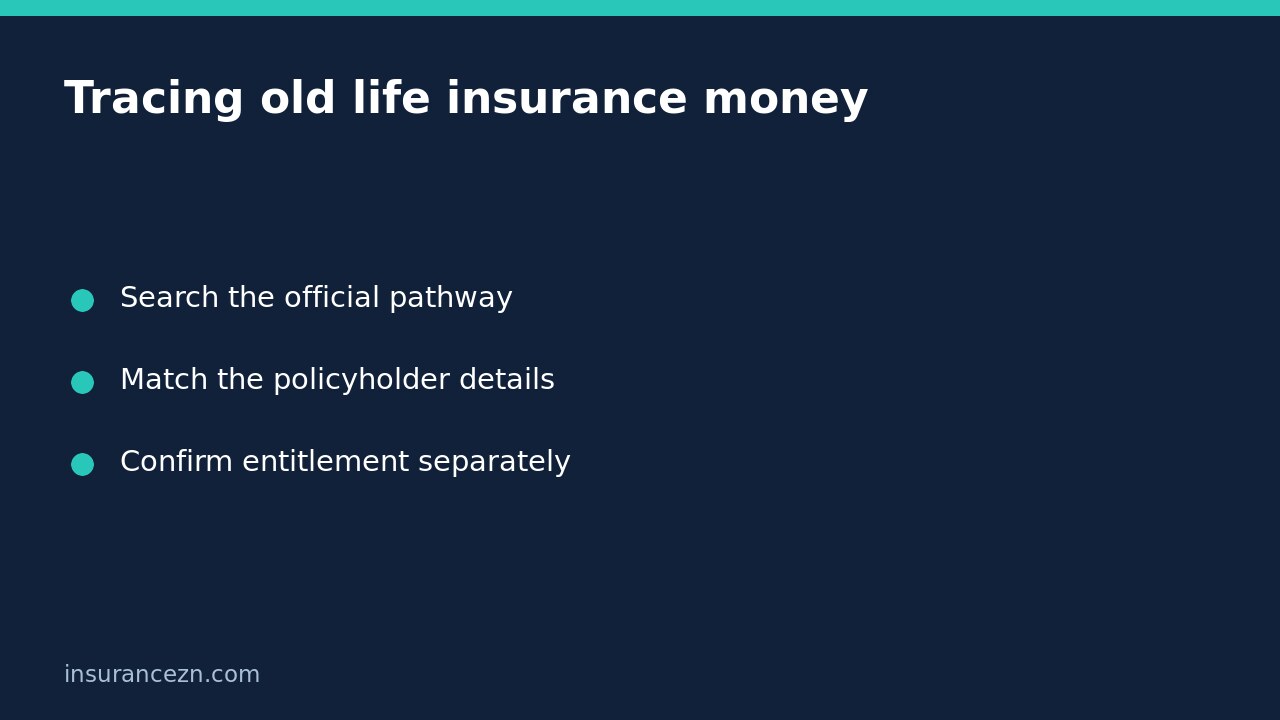
ASIC’s consumer information page identifies lost life insurance money as part of Australia’s unclaimed-money system and links to Moneysmart’s free search. Follow the official link from ASIC rather than relying on a paid advertisement or a message claiming that you must pay to discover whether money exists.
That overview supports using an official search; it does not supply a complete claims procedure for every historical policy. Follow the instructions attached to the actual result and ask the identified organisation to confirm the next step. Do not infer a universal waiting period, required document list or payment deadline from a general overview.
Build a small tracing file before making enquiries
Keep a copy of the original letter, envelope and any statement showing the policy number. Note the name printed on the document, previous addresses, approximate dates and any insurer or adviser names. Preserve uncertainty: an old premium entry on a bank statement is a clue, not proof that cover continued indefinitely.
- Distinguish the policy owner, insured person and person making the enquiry.
- Record whether a name changed, and keep evidence available if requested.
- Retain the exact search result or reference rather than rewriting it from memory.
- Keep potentially relevant estate or authority documents secure until the recipient explains what is needed.
Do not email a full identity pack to an address copied from an unexpected message. Independently locate the organisation’s contact channel and ask how sensitive documents should be submitted. Practical help from a relative does not automatically give that relative authority to obtain protected information.
Reconcile a possible match without assuming ownership
A matching name is a reason to investigate, not a completed identity check. Compare the available details with your records and ask which differences need explanation. A former address may be consistent with an old record, while a different person with the same name may explain an apparent match.
For example, imagine finding a result with your late parent’s name and a suburb where they once lived. Keep the result and the old policy letter together, then ask the relevant organisation what it needs to establish the policy connection and your authority. Do not treat the displayed amount as money already approved for the estate, or divide it among family members before entitlement has been determined. This is a hypothetical record-matching example, not a statement about any provider’s distribution rules.
Ask about current cover through a separate enquiry
If your real concern is whether a living family member still has protection, ask the insurer or relevant super fund to confirm the current policy status, insured benefits, policy owner and effective dates. An unclaimed-money result is not a substitute for that confirmation. Equally, finding no result does not establish that no policy exists or that an existing claim has no merit.
Keep beneficiary administration separate too. The person authorised to enquire, the policy owner and the person potentially entitled to a benefit need not be the same. If you are updating an existing policy rather than tracing money, use the separate checklist for checking a beneficiary update after submitting the form.
Track the outcome, not just the submission
Maintain a simple log with the organisation contacted, reference number, documents requested, date sent and next action. Label progress accurately: possible match, enquiry acknowledged, identity evidence requested, entitlement under review, or payment confirmed. An upload receipt means evidence was received through a channel; it does not mean the evidence was accepted or that payment was authorised.
Should I pay someone to run the initial search? ASIC identifies a free official search. Consider that route before agreeing to a recovery service’s fees or giving it authority.
Does an old policy document prove present-day protection? No. Obtain a current, dated response from the organisation responsible for the policy. Keep that response separate from any unclaimed-money investigation so neither process is mistaken for the other.